If you are researching ozone therapy, you have likely come across two names that get compared often: EBO3 (extracorporeal blood oxygenation and ozonation) and 10-pass ozone therapy. Both are advanced blood-based protocols, but they work very differently. This guide walks through what each treatment actually does, how they compare on filtration, oxygenation, session time, and patient experience, and how to think about which one may fit your goals.
What is 10-pass ozone therapy?
10-pass ozone therapy, sometimes called high-dose ozone or hyperbaric ozone, draws a fixed volume of blood (typically around 200 ml), mixes it with medical-grade ozone under mild pressure, and returns it to the body. The cycle is repeated up to ten times in a single appointment — hence the name.
It is a batch process: blood is drawn, ozonated, and reinfused, then the next batch is drawn. Each pass treats a relatively small volume of blood at a time.
What is EBO3 therapy?
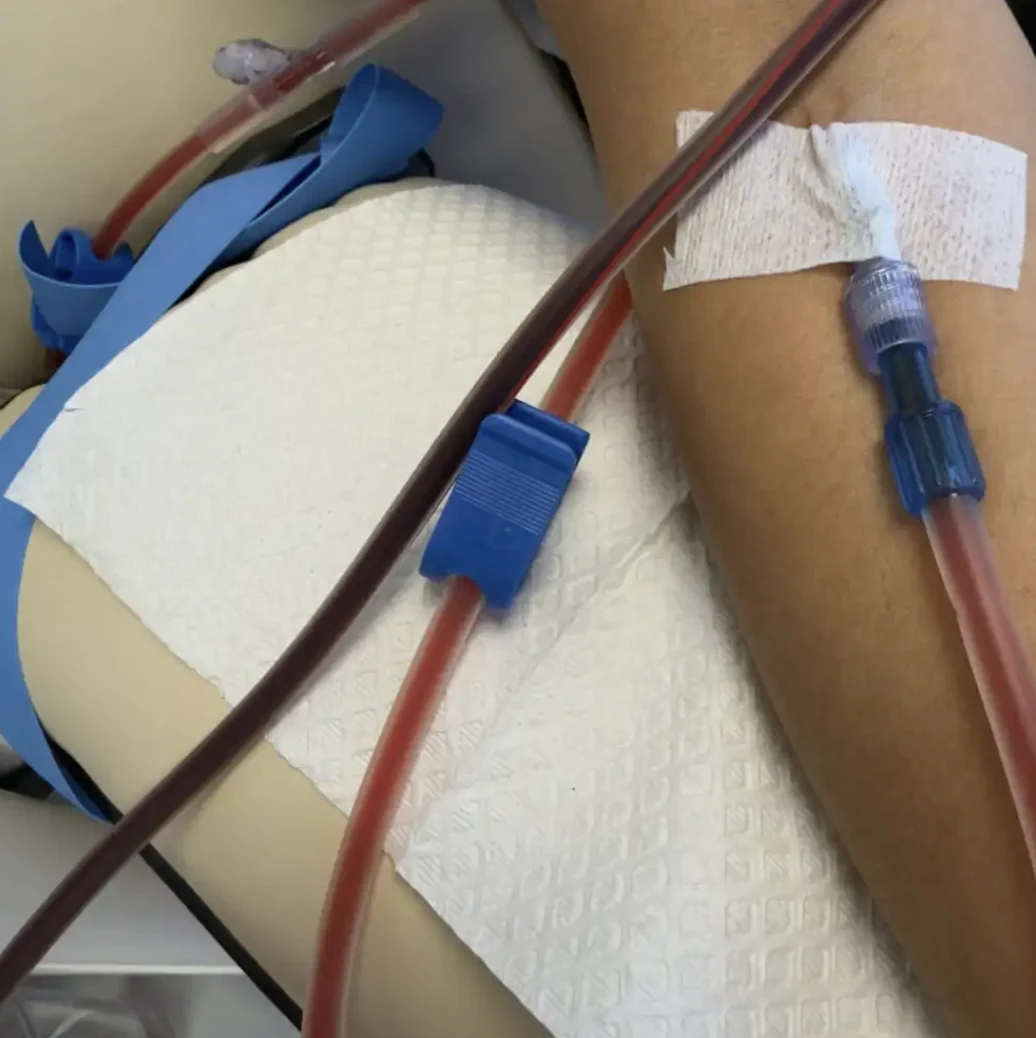
EBO3 is a continuous-flow protocol. Blood circulates through a closed extracorporeal circuit where it is filtered, oxygenated, and exposed to ozone and UV light, then returned to the body in real time. Rather than treating one batch at a time, EBO3 processes a far larger total blood volume across a single session.
The combination of filtration plus oxygenation is what distinguishes EBO3 from most ozone-only protocols.
Side-by-side comparison
At a high level, here is how the two protocols differ on the dimensions patients ask about most.
Blood volume treated
10-pass treats roughly 2 liters of blood across ten batches. EBO3 continuously circulates and treats a significantly larger total volume in one session, because blood is moving through the circuit the entire time rather than waiting in batches.
Filtration
10-pass ozone therapy does not include a filtration step — blood is ozonated and returned. EBO3 layers in continuous filtration alongside oxygenation and ozone, which is the part of the protocol many patients are specifically looking for.
Oxygenation capacity
Because EBO3 runs continuously and pairs ozone with dedicated oxygenation, it delivers a higher overall oxygen exposure per session than a batch protocol of equivalent length.
Session experience
10-pass sessions involve repeated draw-and-return cycles. EBO3 uses a single continuous circuit, which most patients describe as a steadier, calmer experience from start to finish.
Which protocol is right for you?
Neither protocol is universally better — they are different tools. 10-pass ozone therapy is well-established and may be a reasonable option for patients focused specifically on ozone exposure in a shorter, simpler format.
EBO3 is the protocol patients typically choose when they want filtration and oxygenation included alongside ozone, a larger treated blood volume per session, and a continuous-flow experience. It is the signature protocol at our Rancho Palos Verdes clinic for exactly those reasons.
What to ask any clinic offering ozone or EBO protocols
Before booking, ask how much blood is actually treated per session, whether filtration is part of the protocol, who supervises the treatment, and how the clinic monitors you during and after. The answers should be specific, not marketing language.
If you are comparing EBO3 to 10-pass ozone therapy and want a clear recommendation based on your health history and goals, the best next step is a complimentary consultation with our clinical team. We will walk you through the protocol, the equipment, and what a typical course of treatment looks like.
Ready to talk with our team?
Book a complimentary consultation at our Rancho Palos Verdes clinic.
Request a ConsultationRelated services
Related reading
More from the EBO2 Therapy and Wellness library.
How EBO3 Therapy Supports Cellular Rejuvenation
An overview of EBO3 and the cellular wellness pathways it is designed to support, written for patients in Rancho Palos Verdes and the South Bay.
ReadEverything You Need to Know About EBO2 Treatment
What EBO2 treatment is, what a session actually looks like, and how to know whether the protocol belongs in your longer-term wellness plan today.
ReadUnderstanding the Key Differences Between EBO2 and EBO3
A clear side-by-side comparison of EBO2 and EBO3 written in plain language for patients exploring options at our Rancho Palos Verdes clinic today.
ReadEBO3 is a clinic-branded wellness protocol. These references describe ozone's regulatory context and the state of the published evidence; they do not establish EBO3 as a treatment for any disease, and ozone therapy is not FDA-approved. Published EBOO/ozone literature is heterogeneous, largely preliminary or uncontrolled, and mostly of low or very-low certainty.
- 21 CFR § 801.415 — Federal regulation on ozone (labeling context)
eCFR (U.S. Electronic Code of Federal Regulations)
Federal labeling regulation for medical devices generating ozone. Regulatory context only; does not indicate FDA approval of ozone as a therapy.
- Bocci V. Ozone as Janus: this controversial gas can be either toxic or medically useful
Mediators of Inflammation (PMID 16156950)
Narrative review discussing extracorporeal blood oxygenation with ozone (EBOO) and related ozone modalities. Evidence at the time was preliminary and largely uncontrolled — insufficient to validate EBOO for any disease indication.
- Umbrella review of ozone therapy across clinical indications
Medical Sciences (DOI 10.3390/medsci14020289)
Umbrella review of systematic reviews of ozone therapy across multiple indications. Findings are heterogeneous with most conclusions rated low or very-low certainty; overall evidence remains insufficient to establish general clinical efficacy.
- Smith NL et al. Ozone therapy: an overview of pharmacodynamics, current research, and clinical utility
Medical Gas Research (PMID 29152215)
Peer-reviewed overview of ozone therapy noting that the current clinical evidence base is heterogeneous and further rigorous study is needed.
References describe general evidence, safety, or regulatory context. They do not establish an individual benefit for any specific person, and they do not validate EBO2's proprietary clinic protocols.
Medical Disclaimer: Information on this website is for educational purposes only and is not a substitute for medical advice. Individual results vary. Consult a qualified healthcare provider before beginning any treatment.