
A growing number of longevity-minded clients are asking a more precise question than simply how to age well. They want to know whether therapeutic plasma exchange for longevity has a credible place inside a serious, physician-supervised wellness strategy. The short answer is yes - for the right person, in the right setting, with the right screening, it may be a meaningful adjunct for recovery support, cellular wellness, and personalized healthy aging planning.
Considering Therapeutic Plasma Exchange? Explore our full Therapeutic Plasma Exchange program at EBO2 Therapy and Wellness — learn more →
What therapeutic plasma exchange is
Therapeutic plasma exchange, often called TPE or plasmapheresis, is a clinical procedure that separates plasma from the blood and replaces it with an appropriate replacement fluid under medical supervision. In conventional medicine, TPE has established uses in specific disease settings. In the longevity space, interest is different. The discussion is not about disease treatment claims. It is about whether changing the circulating plasma environment may support broader wellness goals in carefully selected adults.
That distinction matters. Longevity care should not borrow hospital procedures and casually rebrand them as lifestyle upgrades. A more responsible view is that therapeutic plasma exchange for longevity is a consultation-based option that may fit into a broader plan designed to support cellular wellness, recovery, and healthy aging, depending on a person's goals, baseline health, and provider assessment.
Why therapeutic plasma exchange for longevity gets attention
Much of the interest comes from the role plasma plays in carrying signaling molecules, proteins, lipids, inflammatory mediators, and other circulating factors. As we age, the internal environment reflected in plasma can shift in ways that may influence how we feel and recover. That does not mean one procedure “supports healthy aging.” It means the plasma compartment has become a point of interest in longevity medicine because it is dynamic, measurable, and clinically accessible.
For some clients, the appeal is less about a headline and more about strategy. They may already be focused on recovery, performance, travel stress, environmental load, sleep disruption, or a demanding schedule that leaves them looking for higher-level support. In that context, TPE is sometimes considered alongside other advanced wellness therapies rather than as a standalone answer.
The strongest case for considering it is usually not that someone wants a dramatic promise. It is that they want a tightly managed, provider-guided protocol with real screening, real monitoring, and a clear rationale.
Who may be interested in TPE
The most appropriate candidates are often health-conscious adults who are already investing in personalized longevity planning and want more than generalized advice. That may include executives under sustained stress, athletes focused on recovery support, frequent travelers managing high physical demand, or active adults interested in a more comprehensive view of healthy aging.
Even then, interest alone is not the same as fit. TPE is not a casual add-on. A medically responsible practice will look at history, goals, current therapies, medications, hydration status, vascular access considerations, and overall readiness before deciding whether it belongs in a protocol.
This is one reason high-trust clients tend to prefer a private consultation model. They are not looking for trendy wellness packaging. They are looking for judgment.
What benefits people are usually seeking
In the longevity setting, clients generally explore therapeutic plasma exchange for longevity because they are interested in support across a few recurring areas: cellular wellness, recovery support, healthy aging, cognitive wellness, and overall resilience. Some also view it through the lens of detox pathway support, particularly when their broader protocol includes nutritional, mitochondrial, and oxygenation-focused therapies.
The language here should stay careful. TPE may support aspects of wellness and recovery for some individuals, but results vary. How someone responds depends on baseline physiology, lifestyle, sleep, metabolic health, stress load, and what else is happening in their care plan.
That last point is often overlooked. Advanced procedures tend to perform best when they are part of a coherent system rather than used in isolation. For one client, TPE may be paired with IV support and recovery-focused planning. For another, it may sit within a larger physician-guided protocol that also includes EBO3 Therapy, NAD+ Therapy, Hyperbaric Oxygen Therapy, red light therapy, or a cellular optimization review.
What to expect from the process
The experience begins well before the procedure itself. A quality practice starts with consultation, history review, and screening. The goal is to understand why the client is interested, whether expectations are realistic, and whether the procedure makes sense within a personalized protocol.
During therapeutic plasma exchange, blood is circulated through specialized equipment that separates plasma from other blood components. The removed plasma is replaced according to the provider's clinical plan. The procedure is supervised, monitored, and structured rather than casual or spa-like.
Most clients want to know what the session feels like. In practical terms, they should expect time in a clinical setting, monitoring throughout, and a process that requires preparation and recovery planning. Some people tolerate it quite well. Others may need a more conservative approach, especially if they are sensitive to fluid shifts, prone to fatigue, or balancing multiple therapies.
This is also where provider guidance matters. Timing, sequencing, and spacing can shape the experience. More is not always better in longevity care, and advanced therapies should be integrated with restraint.
Safety, screening, and the limits of the idea
TPE deserves respect because it is a real medical procedure, not a wellness trend with a softer name. Screening is required. The appropriateness of the therapy depends on the individual, and not everyone is a candidate.
Potential considerations can include vascular access, blood pressure tolerance, medication interactions, electrolyte balance, protein status, and the client's broader medical picture. A physician-supervised setting is not a luxury detail here. It is central to responsible care.
There is also a larger strategic limit. Longevity is not built on procedures alone. If sleep is poor, metabolic markers are ignored, stress is unmanaged, nutrition is inconsistent, and exercise recovery is neglected, no advanced service will compensate for the basics. TPE may support a plan. It cannot replace one.
That may sound less glamorous than marketing language, but it is exactly what sophisticated clients usually want: realism.
Where TPE fits in a personalized longevity protocol
The right way to think about therapeutic plasma exchange for longevity is as one option within a broader architecture of care. Some clients need recovery support. Others are more focused on oxygenation, energy, travel resilience, or structured cellular wellness planning. The protocol should reflect the person, not the popularity of the therapy.
In a concierge practice such as EBO2 Therapy and Wellness, that often means evaluating how TPE may align with other advanced wellness therapies. EBO3 Therapy may appeal to clients seeking oxygenation-focused support. HBOT may fit those prioritizing recovery and performance. IV Therapy, NAD+, glutathione, peptide strategies, and cellular reporting may all play different roles depending on the objective.
The point is not to stack services. The point is to build a coherent sequence. The best protocols feel edited, not crowded.
Is therapeutic plasma exchange for longevity worth considering?
For the right client, yes. Not because it is fashionable, and not because it promises impossible outcomes. It is worth considering when there is a clear wellness rationale, thoughtful screening, and a provider-guided plan that respects both potential upside and practical limits.
It may be especially relevant for clients who want a higher level of personalization than they can get from generic wellness offerings. Those individuals are often less interested in trends and more interested in whether a therapy can be integrated intelligently into a long-range healthy aging strategy.
That is the standard advanced longevity care should meet. Not louder claims, but better judgment.
If you are evaluating TPE, the most useful next step is not to ask whether it is for everyone. It is to ask whether it makes sense for you, in this season of your health, with your goals, labs, recovery needs, and tolerance for intervention. That is where meaningful longevity planning begins.
Ready to talk with our team?
Book a complimentary consultation at our Rancho Palos Verdes or West Palm Beach clinic.
Request a ConsultationRelated services
Established therapeutic plasma exchange (TPE) indications in ASFA guidelines are disease-specific. Longevity or general-wellness use in healthy individuals is not an ASFA-endorsed indication, and recent 2025 studies of plasmapheresis-based aging biomarkers are small, use surrogate endpoints, and report conflicting results — some epigenetic clocks even increased.
- ASFA Guidelines on the Use of Therapeutic Apheresis in Clinical Practice — 9th Special Issue
American Society for Apheresis, Journal of Clinical Apheresis (DOI 10.1002/jca.22043, PMID 37017433)
Reference guideline categorizing evidence-based medical indications for therapeutic apheresis including TPE. Wellness/longevity use is not addressed as an endorsed indication.
- Randomized trial of therapeutic plasma exchange plus IVIG on aging biomarkers
Aging Cell (DOI 10.1111/acel.70103)
Small randomized trial of TPE combined with IVIG reporting movement on surrogate aging biomarkers. Not a longevity outcomes trial; results are not proof of extended lifespan or general anti-aging benefit.
- Effects of plasmapheresis on epigenetic aging biomarkers — Scientific Reports 2025
Scientific Reports (Nature) 2025
Different plasmapheresis protocol reporting no epigenetic rejuvenation and increases in some epigenetic clocks. Presented alongside the acel.70103 trial so evidence remains balanced and non-promotional.
References describe general evidence, safety, or regulatory context. They do not establish an individual benefit for any specific person, and they do not validate EBO2's proprietary clinic protocols.
Related reading
More from the EBO2 Therapy and Wellness library.
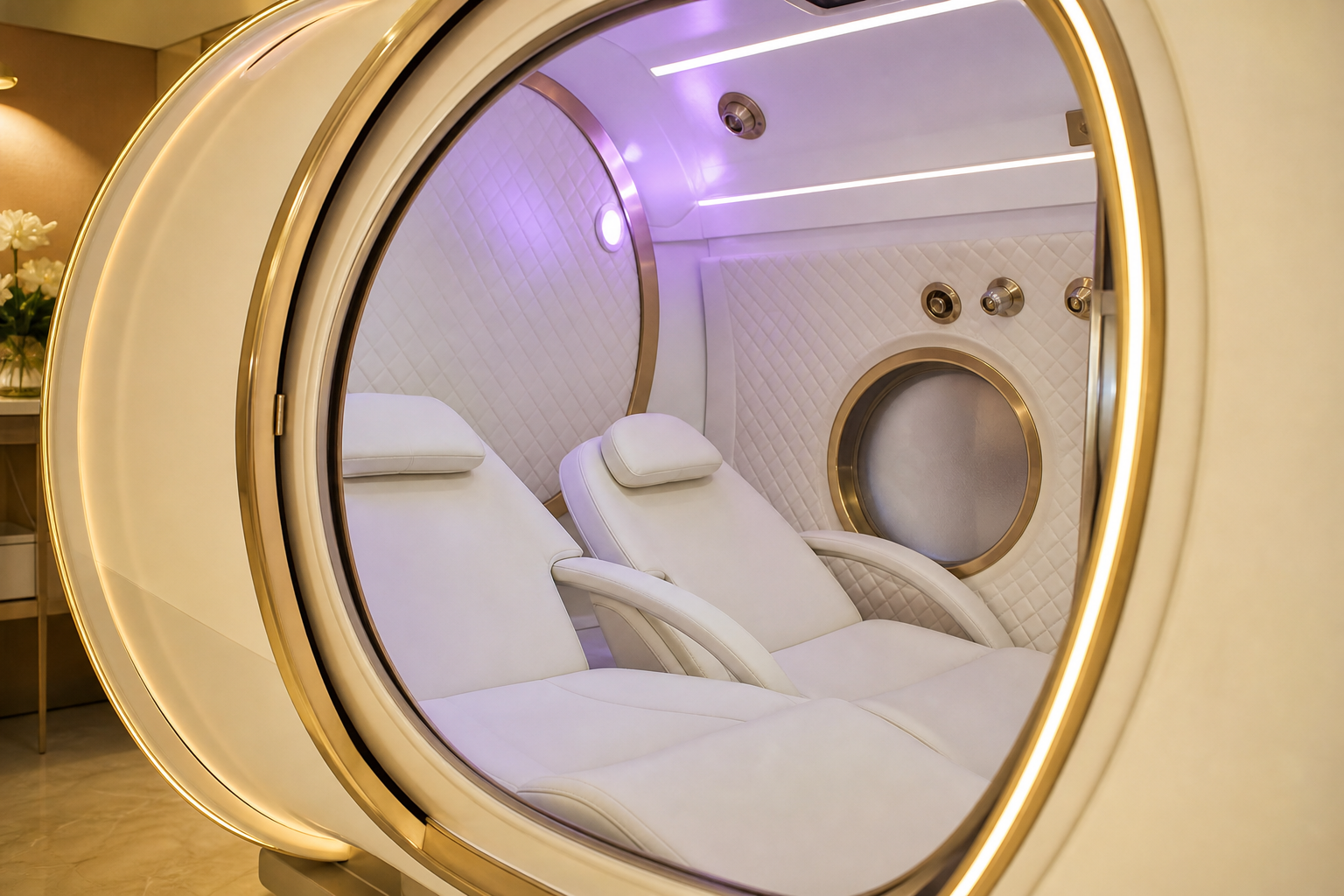
HBOT Versus Oxygen Chambers: What Changes?
HBOT versus oxygen chambers: learn how pressure, oxygen delivery, screening, and clinical oversight differ when selecting a personalized wellness protocol.
Read
What a Regenerative Biologics Consultation Covers
A regenerative biologics consultation reviews goals, history, screening, and personalized wellness options with a physician-guided concierge care team.
Read
Can NAD IV Support Focus? A Clinical View
Can NAD IV support focus? Learn how physician-guided NAD+ therapy may fit a personalized plan for cognitive wellness, energy, recovery, and longevity care.
ReadMedical Disclaimer: Information on this website is for educational purposes only and is not intended to diagnose, treat, cure, or prevent any disease. It is not a substitute for medical advice. Individual results vary. Consult a qualified healthcare provider before beginning any treatment.