Quick answer
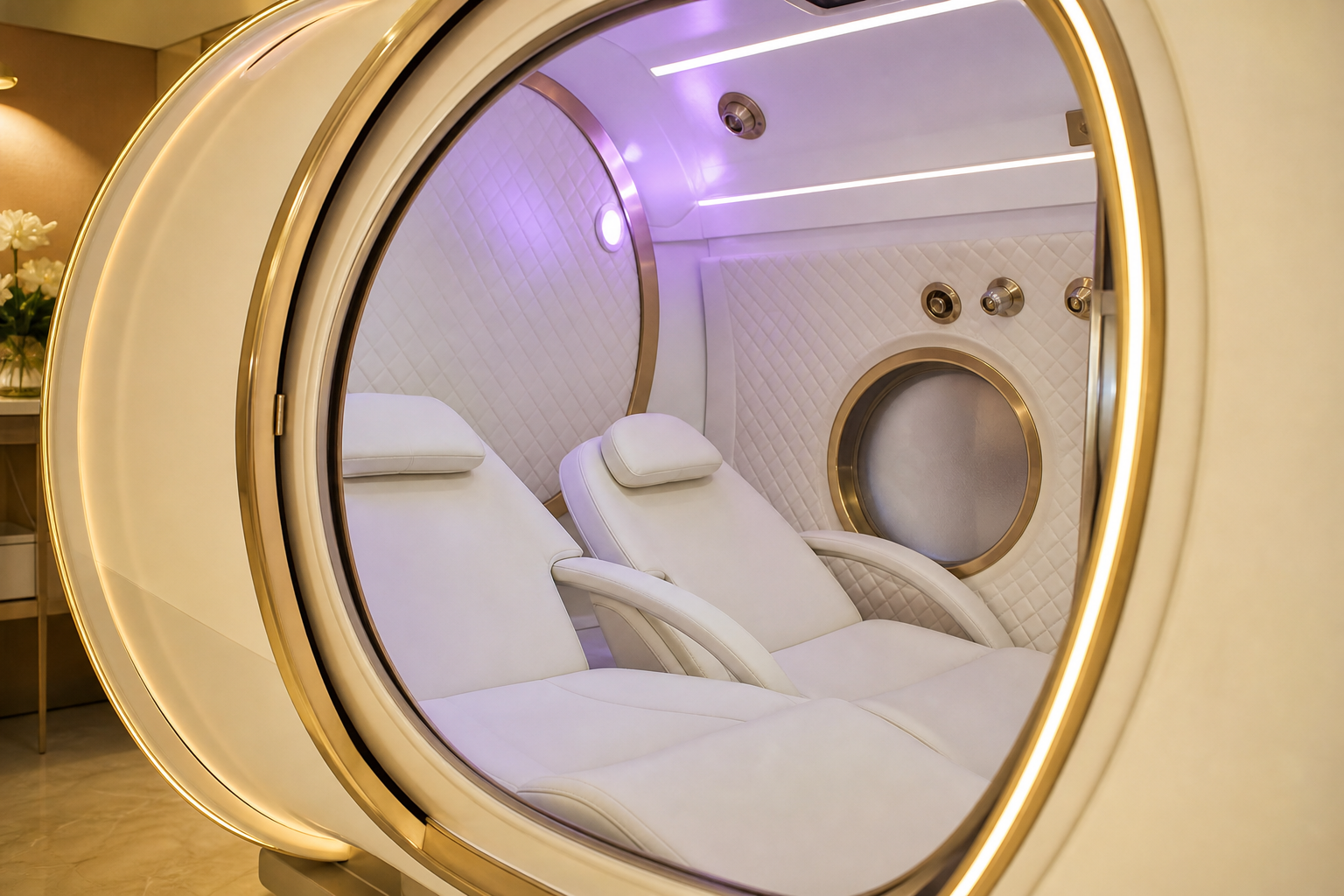
HBOT (Hyperbaric Oxygen Therapy) delivers oxygen at elevated atmospheric pressure inside a sealed chamber. Hard-shell HBOT supports higher pressures than typical soft-shell home units. Our clinics operate hard-shell chambers as part of a physician-guided wellness program.
Hard-shell vs soft-shell, briefly
Hard-shell chambers are built to safely support higher pressures than soft-shell consumer units. The difference is structural — the chamber's design determines what pressures it can hold and how it is used clinically.
What a session looks like
Sessions typically run 60 to 90 minutes including pressurization and decompression. You are comfortable inside the chamber and can communicate with staff throughout.
Cadence is determined by your provider based on your goals and overall plan, not by a fixed package.
Stacking HBOT with other modalities
HBOT is often sequenced with EBO3, IV Therapy, Red Light Therapy, or regenerative biologics. The point of stacking is not “more is better” — it is to align modalities with your goals across a longer arc.
Frequently asked
- Is HBOT a disease treatment?
- Our HBOT program is wellness-focused and consultation-based. It is not a substitute for emergency or disease-specific medical care.
- How long are sessions?
- Usually 60 to 90 minutes including pressurization and decompression.
- Hard-shell or soft-shell?
- Hard-shell. Our clinics operate hard-shell chambers capable of higher pressures than soft-shell home units.
Related services
Ready to talk with our team?
Book a complimentary consultation at our Rancho Palos Verdes or West Palm Beach clinic.
Request a ConsultationRelated reading
More from the EBO2 Therapy and Wellness library.
Red Light Therapy, Near-Infrared Light, and Photobiomodulation Explained
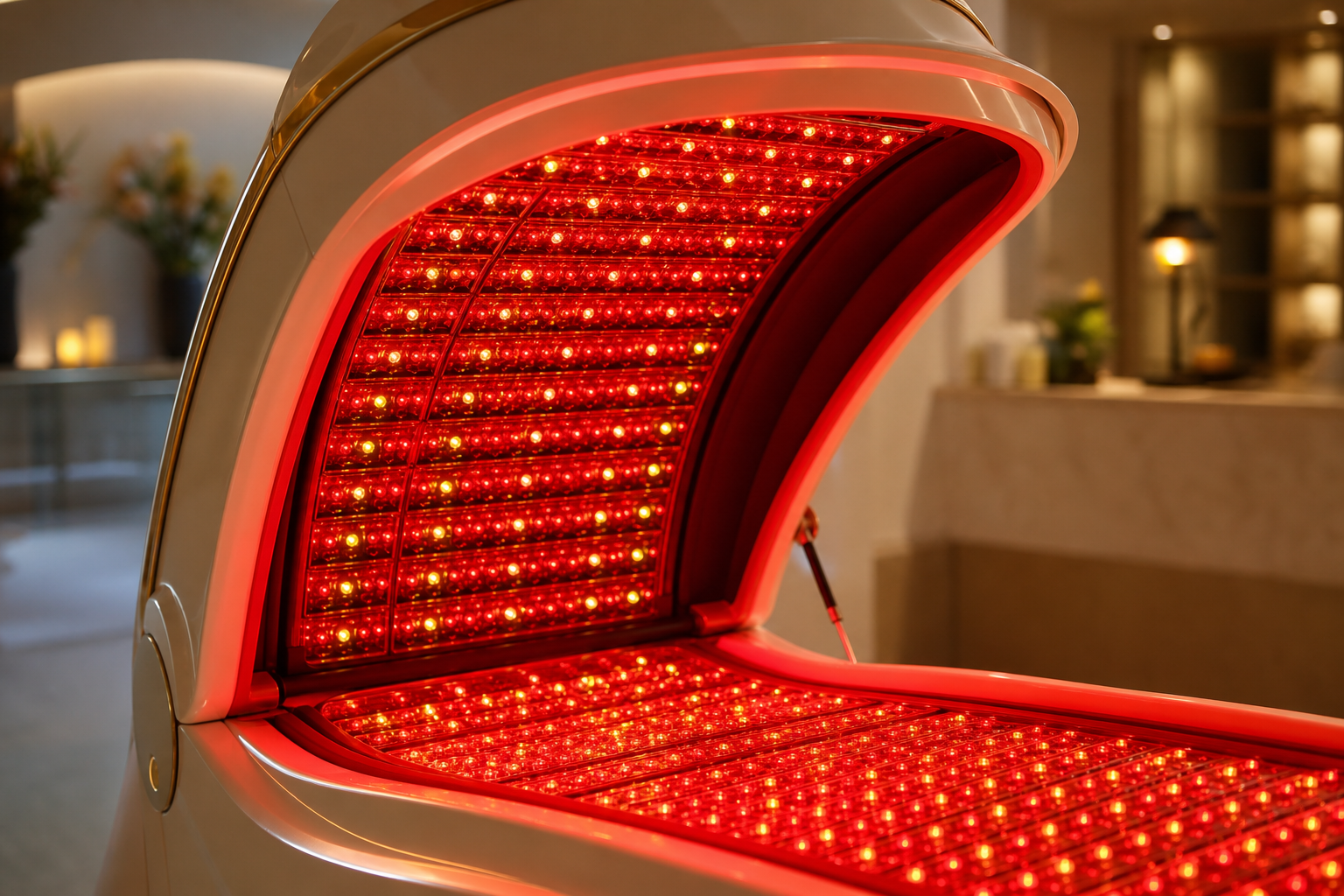
Red light, near-infrared, and photobiomodulation are often used interchangeably. Here is what each term actually refers to and what to expect from a clinical session.
Read
IV Therapy Guide: NAD+, Glutathione, Methylene Blue, and Recovery Protocols
A direct, jargon-free guide to NAD+, glutathione, methylene blue, and recovery-focused IV protocols — and how to think about which one fits your goals.
Read
EBO3 Therapy vs. 10-Pass Ozone Therapy: A Side-by-Side Comparison
How EBO3 compares to traditional 10-pass ozone protocols — including continuous filtration, oxygenation capacity, and what each is best suited for.
ReadFDA clearance covers specified hyperbaric chambers, and accepted clinical use is tied to specific conditions, pressures, and protocols documented by UHMS. General wellness or anti-aging claims are not FDA-cleared uses, and Cochrane reviews continue to describe limited or inconclusive evidence outside those accepted indications.
- FDA letter to health care providers — Follow Instructions for Safe Use of Hyperbaric Oxygen Therapy Devices
U.S. Food & Drug Administration
FDA safety communication distinguishing FDA-cleared HBOT chambers and their labeled indications from wellness marketing claims.
- UHMS Hyperbaric Oxygen Therapy Indications — 15th Edition (front matter & references)
Undersea and Hyperbaric Medical Society
UHMS indications manual defining accepted HBOT indications with condition-specific protocols. Accepted uses are narrow and protocol-defined; not a blanket wellness endorsement.
- Cochrane systematic review of hyperbaric oxygen therapy (PMID 26106870)
Cochrane Database of Systematic Reviews (PMID 26106870)
Cochrane review describing limited and often inconclusive evidence for HBOT outside its accepted indications — supports the condition/protocol-specific framing above.
References describe general evidence, safety, or regulatory context. They do not establish an individual benefit for any specific person, and they do not validate EBO2's proprietary clinic protocols.
Medical Disclaimer: This article is educational and is not a substitute for medical advice, diagnosis, or treatment. Programs are physician-guided, consultation-based, and personalized after screening. Results vary.