Quick answer: Advanced IV therapy is a physician-supervised, consultation-based approach to intravenous nutrient and wellness support. Rather than selecting a pre-set “drip” from a menu, a qualified provider reviews your goals, health history, medications, and relevant clinical factors to determine whether an IV protocol is appropriate and how it should be structured.
For clients seeking private, longevity-focused care, an advanced IV therapy guide begins with a distinction that matters: IV therapy is not a one-size-fits-all wellness ritual. It is a provider-guided service that may be incorporated into a broader plan for recovery support, hydration support, cellular wellness, performance optimization, or travel-related wellness needs. Screening is required, and results vary.
What makes IV therapy advanced?
The difference is not simply a larger menu of ingredients. Advanced IV therapy is defined by clinical judgment, personalization, administration standards, and how thoughtfully the IV is integrated into an individual wellness plan.
A basic IV bar model often starts with a consumer choosing a named blend. A concierge model starts elsewhere: What is the client trying to support? Are there recent lifestyle demands, training loads, travel schedules, hydration concerns, or recovery goals to consider? Are there health conditions, prescriptions, allergies, lab findings, or contraindications that may change the recommendation? The answers determine whether IV therapy is suitable at all and, if so, which approach is reasonable.
At EBO2 Therapy and Wellness, IV therapy is considered within a private consultation and may be coordinated with broader longevity-focused services when appropriate. The goal is not to promise a dramatic outcome from a single session. It is to create a measured, physician-supervised plan aligned with the client’s needs and tolerance.
Also known as infusion therapy or nutrient IV therapy
Advanced IV therapy may be searched under several names, including IV infusion therapy, vitamin infusion, nutrient IV therapy, hydration IV therapy, wellness infusion, and intravenous micronutrient therapy. Those terms can describe very different experiences, from a simple hydration-focused infusion to a more individualized provider-guided protocol.
The terminology alone does not establish quality or suitability. What matters is the clinical process behind the infusion: who evaluates the client, what is included, how administration is monitored, and whether there is a clear reason to select or avoid certain components.
Who may be interested in a personalized IV protocol?
Many clients considering IV therapy are already attentive to sleep, nutrition, exercise, and long-term wellness planning. They may be executives working through demanding schedules, frequent travelers managing routine disruptions, athletes prioritizing recovery support, or active adults seeking a more intentional approach to hydration and nutrient support.
An IV protocol may be considered for goals such as energy support, recovery support, cellular vitality, cognitive wellness, immune resilience, or general wellness maintenance. These are wellness-oriented goals, not disease-treatment claims. A provider should be clear about what an infusion may support, what remains uncertain, and when conventional medical evaluation is more appropriate.
For some clients, IV therapy is most useful as an occasional service around a specific demand, such as extensive travel or an intense training period. For others, it may be part of a recurring wellness plan. Frequency depends on the individual, the ingredients being considered, response to prior sessions, and the provider’s assessment. More is not automatically better.
What an advanced IV therapy guide should help you evaluate
Before booking, look beyond branding, ingredient names, and claims of convenience. A premium IV experience should have a defined clinical framework. Four questions are especially useful:
- Is the therapy physician-supervised and administered by qualified clinical professionals?
- Does the practice conduct meaningful screening before recommending an infusion?
- Are protocols personalized rather than selected solely from a generic menu?
- Is there a clear plan for monitoring, documentation, and follow-up when needed?
These standards are particularly relevant for clients with complex medical histories, prescription medications, cardiovascular or kidney considerations, known allergies, pregnancy, or previous infusion reactions. A responsible provider may recommend a modified protocol, defer treatment, request medical clearance, or advise that IV therapy is not appropriate. That is not an inconvenience. It is part of careful care.
What to expect during a private IV consultation
A well-run IV therapy visit begins before the IV is placed. Your consultation may include discussion of your health history, current medications and supplements, allergies, wellness priorities, recent travel, activity level, sleep patterns, hydration habits, and previous experience with infusions. Depending on the situation, providers may recommend additional review or testing before proceeding.
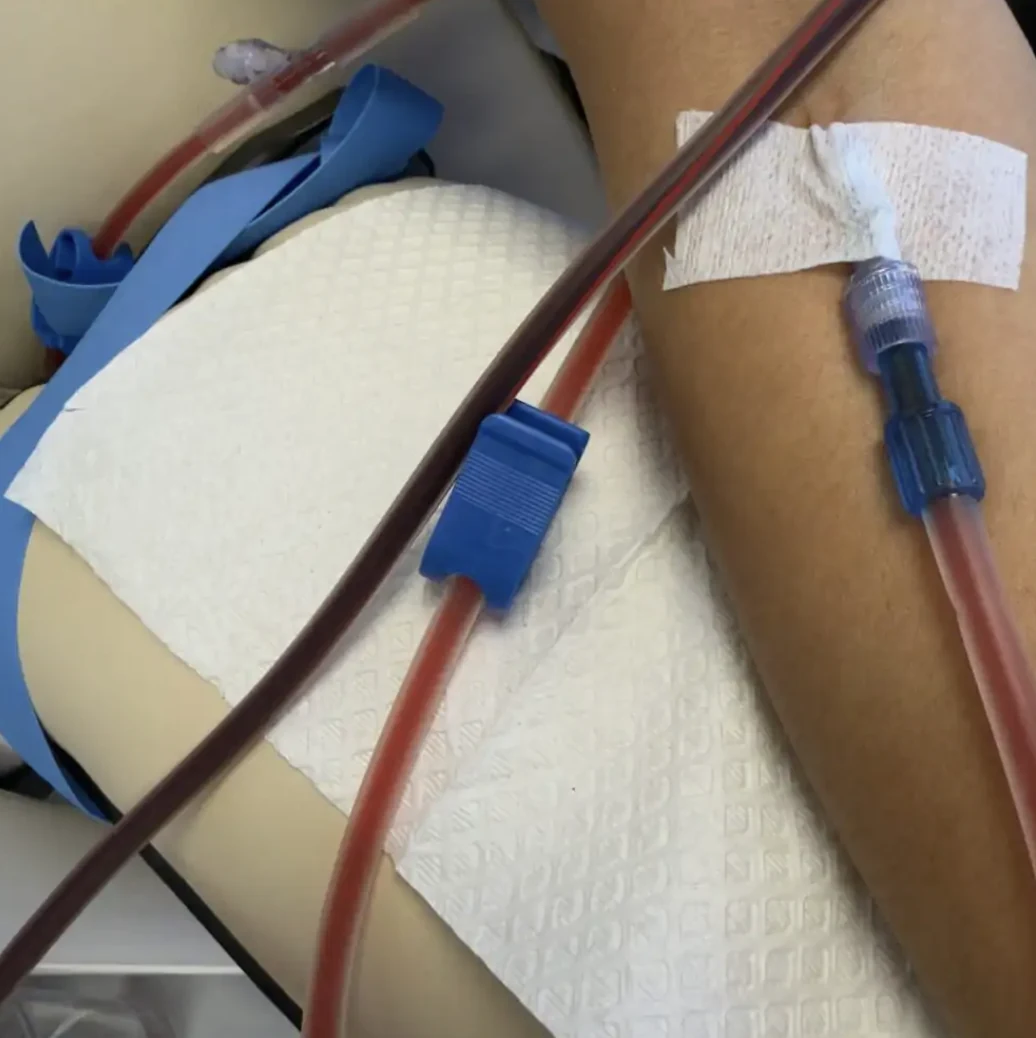
Once a protocol is selected, the IV is administered in a calm, clinically managed setting. Timing varies according to the planned infusion and individual factors. Clients are generally monitored during the appointment, and the clinical team can adjust the experience when appropriate. Some people prefer to use the time quietly; others schedule around work or travel. The concierge standard is privacy without sacrificing oversight.
Afterward, your provider may offer guidance related to hydration, activity, meals, supplementation, or timing of future wellness services. The next step may be another IV session, or it may be no further treatment at all. A personalized protocol should evolve based on your goals and response rather than follow an automatic schedule.
IV therapy in a broader longevity plan
IV therapy can stand alone, but some clients pursue it alongside other advanced wellness therapies. The right combination depends on goals, screening, timing, and provider guidance.
For example, NAD+ Therapy may be discussed by clients interested in cellular wellness and energy-related support. A glutathione push may be considered within a wellness protocol designed to support antioxidant pathways. Methylene Blue IV requires particularly careful clinical review because of potential medication interactions and other considerations.
Clients focused on oxygenation and recovery may also ask about EBO3 Therapy, Hyperbaric Oxygen Therapy, or red light and near-infrared photobiomodulation. Those services are distinct from IV therapy and involve different eligibility considerations. A thoughtful clinic does not treat them as interchangeable, nor does it stack services simply to make a protocol look more advanced.
For individuals seeking a more comprehensive longevity strategy, a CTOI Cellular Optimization Report or private provider consultation may help organize priorities across lifestyle, recovery, oxygenation-focused care, and advanced wellness therapies. The value is in the plan, not in accumulating procedures.
Safety, screening, and realistic expectations
IV therapy involves venous access and should be approached with the same care expected of any clinical procedure. Potential issues can include discomfort at the insertion site, bruising, vein irritation, infiltration, lightheadedness, or reactions related to an ingredient. Risks and suitability vary based on the formulation and the person receiving it.
This is why screening matters. Be prepared to share your full medication and supplement list, relevant diagnoses, allergies, kidney or heart concerns, pregnancy status, and prior reactions. Do not assume that a nutrient is appropriate simply because it is commonly discussed in wellness settings. Intravenous administration changes the context, dose, and need for professional oversight.
A medically responsible practice will not position IV therapy as a substitute for emergency care, primary care, sleep, nutrition, exercise, or treatment directed by your physician. It also will not guarantee results. The appropriate expectation is individualized wellness support within a carefully considered plan.
Advanced IV therapy in Rancho Palos Verdes and West Palm Beach
Clients in Southern California and South Florida often seek IV therapy that feels more private and clinically attentive than a walk-in drip lounge. EBO2 Therapy and Wellness serves clients through concierge wellness locations in Rancho Palos Verdes, California, and West Palm Beach, Florida.
For clients traveling from the South Bay, Los Angeles, Orange County, Palm Beach, Jupiter, Boca Raton, or surrounding communities, the consultation-based model allows the discussion to extend beyond a single infusion. It creates space to consider recovery demands, travel, performance priorities, and other advanced wellness therapies in context.
Frequently asked questions
How often should I receive IV therapy?
There is no universal schedule. Some clients seek occasional support around travel, training, or demanding periods, while others may be candidates for a structured plan. Frequency should be determined through provider guidance, response, and ongoing screening.
Is advanced IV therapy better than oral supplements?
They serve different purposes. Oral nutrition and supplementation may be appropriate for many people and remain foundational. IV therapy may be considered when a provider believes intravenous support fits the client’s wellness goals and clinical profile. The choice depends on the individual rather than a blanket rule.
Can I combine IV therapy with NAD+ or other wellness services?
Possibly, but combination protocols require thoughtful planning. Timing, ingredients, medications, tolerance, and the purpose of each therapy should be reviewed before services are combined.
The best IV protocol is rarely the most elaborate one. It is the one selected with restraint, clear clinical reasoning, and a realistic understanding of what personalized wellness care can support.
Ready to talk with our team?
Book a complimentary consultation at our Rancho Palos Verdes or West Palm Beach clinic.
Request a ConsultationRelated services
The only FDA-approved indication for injectable ascorbic acid (ASCOR) is short-term treatment of scurvy in patients for whom oral therapy is not feasible or effective. There is no generalized wellness proof for IV nutrient therapy, and IV administration in people without documented deficiency requires clinical screening and is not a substitute for medical care.
- ASCOR (ascorbic acid injection) — FDA prescribing label
DailyMed (U.S. National Library of Medicine)
Current FDA-approved prescribing information for injectable ascorbic acid. Approved indication is short-term treatment of scurvy when oral therapy is unsuitable — not general wellness.
- Intravenous vitamin therapy: much ado about nothing? — DTB review (PMID 37640530)
Drug and Therapeutics Bulletin / BMJ (PMID 37640530)
Peer-reviewed review concluding the evidence base for IV vitamin therapy in people without deficiency is weak and does not support routine wellness use.
- Myers' cocktail pilot study (PMID 19250003)
Journal of Alternative and Complementary Medicine (PMID 19250003)
Small pilot trial of the Myers' cocktail formulation — hypothesis-generating only, not confirmatory efficacy evidence.
- Intravenous Multivitamin Therapy — evidence review
NCBI Bookshelf / StatPearls
Published review of the evidence and guideline context for IV multivitamin infusions. Does not establish efficacy for wellness indications.
- Vitamin C — Health Professional Fact Sheet
NIH Office of Dietary Supplements
Authoritative reference on vitamin C physiology and safety context. Does not establish IV vitamin C as a proven wellness intervention.
References describe general evidence, safety, or regulatory context. They do not establish an individual benefit for any specific person, and they do not validate EBO2's proprietary clinic protocols.
Related reading
More from the EBO2 Therapy and Wellness library.
What Does EBO Treatment Involve? A Clinical Look
What does EBO treatment involve? Learn how physician-supervised EBO3 Therapy is planned, administered, screened, and personalized for wellness goals.
Read
Palos Verdes IV Therapy, Personally Designed
Palos Verdes IV therapy with physician-supervised screening, personalized infusions, and private concierge care for recovery, vitality, and performance.
Read
TPE Scheduling Questions to Ask Before You Book
Get clear answers to TPE scheduling questions, from consultation timing and screening to visit length, recovery planning, and personalized care plans now.
ReadMedical Disclaimer: Information on this website is for educational purposes only and is not intended to diagnose, treat, cure, or prevent any disease. It is not a substitute for medical advice. Individual results vary. Consult a qualified healthcare provider before beginning any treatment.