A Therapeutic Plasma Exchange appointment should not be placed on a calendar like a routine wellness visit. The most useful TPE scheduling questions begin with clinical fit, current health status, and the practical demands of the day itself. For clients considering a physician-supervised, consultation-based protocol, timing is part of the care plan - not an administrative detail.
TPE, also called therapeutic plasma exchange or plasmapheresis, is a medical procedure in which plasma is separated from blood components and exchanged according to a provider-directed plan. Because it involves individualized screening, vascular access considerations, laboratory review when appropriate, and recovery planning, the right schedule varies considerably from one person to the next.
Quick answer: when should TPE be scheduled?
TPE should be scheduled after a private consultation and required screening have established that the procedure is appropriate for the individual. The appointment should be planned around medication timing, travel, work demands, exercise, hydration, and the possibility that the client may prefer a lighter schedule afterward.
For many clients, a day without back-to-back meetings, strenuous training, alcohol, long-distance travel, or major social obligations is preferable. That does not mean every person needs a full day off. It means the schedule should leave room to respond to how the individual feels, rather than forcing recovery into an already overcommitted calendar.
TPE scheduling questions that shape the plan
A high-quality consultation should answer more than, “What time is available?” It should clarify why a person is considering TPE, what other wellness services or medications are in the picture, and whether the desired timing supports a measured experience.
How long should I reserve for my visit?
The procedure itself is only one part of the appointment. Allow time for check-in, clinical review, preparation, the exchange procedure, observation, and discharge instructions. Total visit length can vary based on the prescribed protocol, the type of access used, the volume and replacement approach determined by the clinical team, and how the client is doing that day.
Rather than scheduling a narrow gap between two commitments, reserve a broad enough window to avoid rushing. A concierge practice should provide a realistic estimate before the appointment, while also explaining that medical care does not always follow a fixed clock.
How far in advance should I book?
Advance planning is especially helpful when TPE is part of a broader personalized protocol. Screening may need to be completed first, records may need review, and the provider may recommend coordinating the date with IV therapy, recovery support, travel, or other advanced wellness therapies.
The appropriate lead time depends on availability and the complexity of the plan. Someone traveling from outside the immediate area may need more coordination than a local client with an established care plan. Booking early also creates time to adjust the appointment if a medication change, illness, or new health concern arises.
Should I schedule TPE before or after travel?
This is one of the most practical questions to raise. A short local drive is different from a same-day flight, a red-eye return trip, or a demanding international itinerary. Travel can affect hydration, sleep, meals, and the ability to follow post-visit guidance comfortably.
For many people, scheduling TPE before a period of lower demand is sensible. Others may prefer to complete it after travel, once they have re-established normal sleep and hydration habits. The better choice depends on the individual, the reason for the procedure, and provider guidance. A private consultation is the place to make that decision rather than relying on a generic timeline.
Can I work, train, or attend an event afterward?
Plan for flexibility. Some clients may feel ready for quiet desk work or a relaxed evening, while others may prefer to go home, eat, hydrate, and rest. Intense exercise, heat exposure, alcohol, and physically demanding obligations may not be ideal immediately afterward, depending on the protocol and the clinician’s instructions.
If an important presentation, athletic event, photo shoot, or social engagement cannot move, disclose it during scheduling. The care team can discuss whether another date would better protect the experience and the client’s comfort.
What to share before your appointment
The scheduling team and clinician need an accurate picture of the variables that could affect planning. Bring forward new symptoms, recent procedures, significant changes in health status, prescription medications, over-the-counter products, supplements, allergies, and prior reactions to medical procedures or infusions.
It is also useful to discuss any history of fainting, difficulty with blood draws, bruising, anemia, bleeding concerns, clotting history, or challenges with hydration. These details are not minor intake questions. They help the provider determine whether TPE is appropriate, whether additional evaluation is needed, and how the appointment should be structured.
Clients sometimes assume that stopping medications or supplements will make scheduling easier. Do not make those changes independently. Medication adjustments should only occur under the direction of the prescribing clinician and the TPE provider when relevant.
Preparing your calendar and body thoughtfully
The best preparation is usually uncomplicated: arrive according to the clinic’s instructions, follow guidance on food and fluids, wear comfortable clothing that allows access as directed, and arrange a calm remainder of the day when possible. Specific instructions can differ, so the clinic’s guidance should take priority over general advice.
If you are prone to feeling lightheaded with procedures, have a long commute, or simply prefer discretion and support, consider arranging a driver or having someone available afterward. Some clients do not need this level of planning, but it can be appropriate for a first visit or a more demanding day.
Avoid treating TPE as a stand-alone item on a wellness checklist. For clients pursuing cellular wellness, recovery support, performance optimization, or longevity-focused care, the surrounding habits matter. Sleep, nourishment, hydration, movement, travel stress, and the sequencing of related therapies can all influence how manageable the appointment feels.
Coordinating TPE with other wellness therapies
TPE may be considered alongside other provider-guided services, such as IV therapy, NAD+ therapy, Hyperbaric Oxygen Therapy, red light therapy, peptide therapy, or an oxygenation-focused EBO3 Therapy protocol. That does not mean every service should be combined or scheduled on the same day.
Sequencing depends on the client’s goals, screening findings, current regimen, tolerance, and the clinician’s judgment. A busy executive preparing for extensive travel may have different timing needs than an athlete in a recovery-focused phase or a client beginning a longer-term wellness plan. Personalized protocols are designed around these distinctions, not around a pre-set package.
Ask whether another therapy should occur before, after, or on a separate day from TPE. Also ask whether any planned treatment could affect lab timing, hydration strategy, or recovery expectations. Coordinating early is more efficient than rearranging a tightly planned week later.
Safety, screening, and reasons to reschedule
Screening is required before TPE. A qualified clinical team should review whether the procedure is appropriate and discuss relevant risks, limitations, and alternatives. Results vary, and no wellness procedure should be presented as a cure, disease treatment, or guaranteed path to a specific outcome.
A scheduled visit may need to be postponed if there is an acute illness, fever, dehydration, a meaningful change in medications, recent medical care that requires review, or another concern identified by the provider. Rescheduling is not an inconvenience when it protects clinical judgment. It is an expected part of responsible, physician-supervised care.
TPE scheduling at EBO2 Therapy and Wellness
At EBO2 Therapy and Wellness, TPE planning begins with a private, physician-supervised consultation rather than a quick booking form. Clients in Rancho Palos Verdes and West Palm Beach can discuss health history, wellness priorities, schedule constraints, and whether a personalized protocol may be appropriate.
This approach is especially valuable for clients balancing demanding travel, athletic commitments, executive responsibilities, or multiple advanced wellness therapies. The objective is a thoughtful care plan with clear expectations, not simply the earliest available appointment.
Frequently asked TPE scheduling questions
Is TPE a same-day booking service?
Not typically. Appropriate scheduling depends on consultation, screening, provider review, and clinical availability. If a client has already completed the required process, the care team can advise on the nearest suitable appointment.
Should I schedule TPE in the morning or afternoon?
Either may be appropriate. Morning appointments can leave more time for a relaxed recovery period, while afternoon appointments may fit better around work or travel. The best choice is the one that allows you to follow preparation and post-visit guidance without pressure.
How often can TPE be scheduled?
Frequency is individualized. It depends on the reason for the procedure, provider assessment, response, relevant labs when indicated, and the broader care plan. A clinician should determine any recommended cadence.
What if I need to cancel because I am not feeling well?
Contact the clinic as soon as possible and describe the change accurately. The team can determine whether rescheduling or further medical guidance is appropriate.
A well-planned TPE appointment protects more than time on a calendar. It creates the space for careful screening, unhurried clinical care, and a recovery plan that fits the life you are actually living.
Ready to talk with our team?
Book a complimentary consultation at our Rancho Palos Verdes or West Palm Beach clinic.
Request a ConsultationRelated services
Established therapeutic plasma exchange (TPE) indications in ASFA guidelines are disease-specific. Longevity or general-wellness use in healthy individuals is not an ASFA-endorsed indication, and recent 2025 studies of plasmapheresis-based aging biomarkers are small, use surrogate endpoints, and report conflicting results — some epigenetic clocks even increased.
- ASFA Guidelines on the Use of Therapeutic Apheresis in Clinical Practice — 9th Special Issue
American Society for Apheresis, Journal of Clinical Apheresis (DOI 10.1002/jca.22043, PMID 37017433)
Reference guideline categorizing evidence-based medical indications for therapeutic apheresis including TPE. Wellness/longevity use is not addressed as an endorsed indication.
- Randomized trial of therapeutic plasma exchange plus IVIG on aging biomarkers
Aging Cell (DOI 10.1111/acel.70103)
Small randomized trial of TPE combined with IVIG reporting movement on surrogate aging biomarkers. Not a longevity outcomes trial; results are not proof of extended lifespan or general anti-aging benefit.
- Effects of plasmapheresis on epigenetic aging biomarkers — Scientific Reports 2025
Scientific Reports (Nature) 2025
Different plasmapheresis protocol reporting no epigenetic rejuvenation and increases in some epigenetic clocks. Presented alongside the acel.70103 trial so evidence remains balanced and non-promotional.
References describe general evidence, safety, or regulatory context. They do not establish an individual benefit for any specific person, and they do not validate EBO2's proprietary clinic protocols.
Related reading
More from the EBO2 Therapy and Wellness library.

How Plasma Exchange Works: A Clinical Overview
Learn how plasma exchange works, what happens during a TPE session, who may be eligible, and why physician-guided screening and planning matter for TPE.
Read
Peptides Versus Regenerative Biologics
Compare peptides versus regenerative biologics, including their roles, screening needs, sourcing questions, and how concierge care personalizes planning.
Read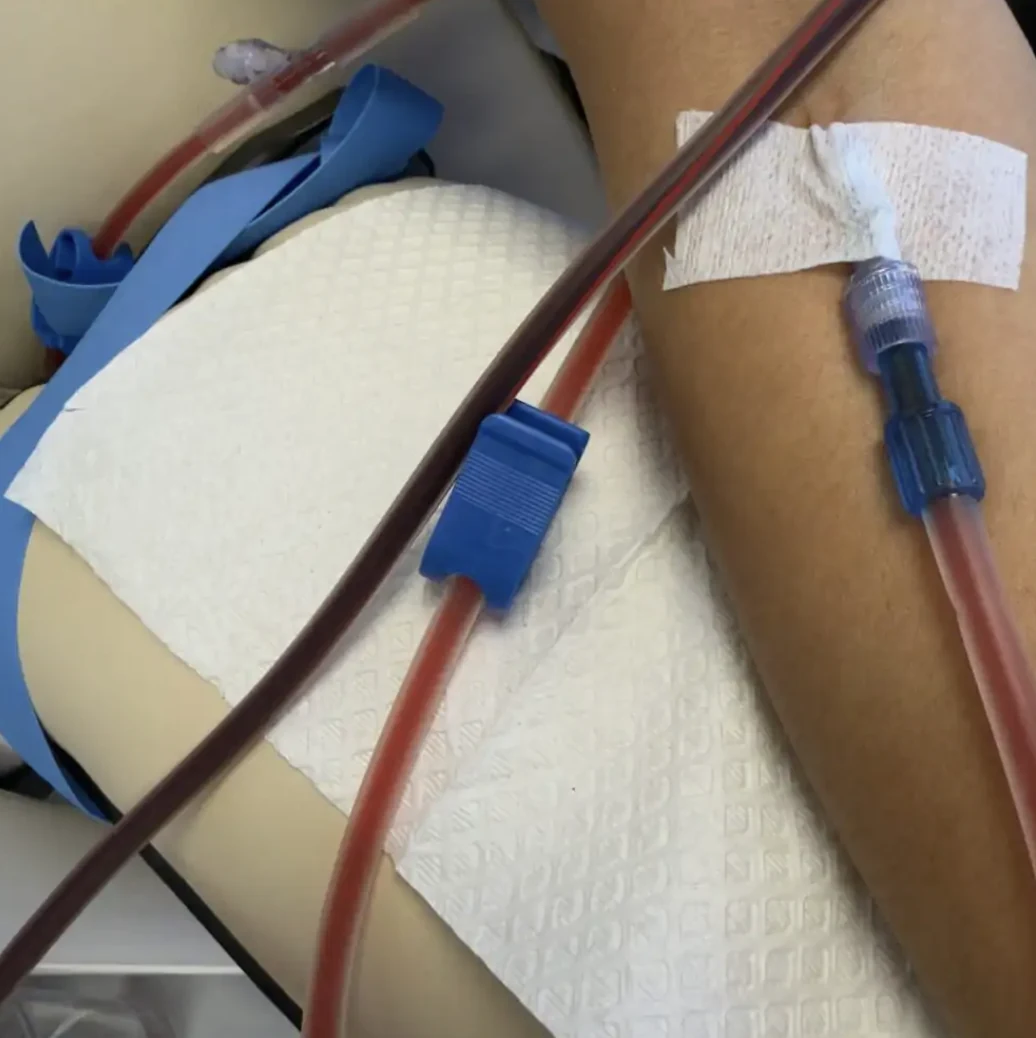
Does EBO3 Support Travel Recovery After Flying?
Does EBO3 support travel recovery? See how physician-supervised, oxygenation-focused care may complement rest, hydration, and a personalized care plan.
ReadMedical Disclaimer: Information on this website is for educational purposes only and is not intended to diagnose, treat, cure, or prevent any disease. It is not a substitute for medical advice. Individual results vary. Consult a qualified healthcare provider before beginning any treatment.