A demanding training block, a long-haul travel schedule, or simply the accumulated strain of a high-output life can leave recovery feeling less predictable than it once did. The potential near infrared therapy benefits are drawing attention among clients who want a noninvasive, provider-guided addition to a broader cellular wellness and longevity-focused plan.
Quick Answer: What May Near Infrared Therapy Support?
Near-infrared therapy uses specific wavelengths of light intended to reach deeper than visible red light. It is commonly delivered as part of photobiomodulation, a light-based wellness approach designed to support cellular energy processes, circulation-related responses, and recovery routines.
For the right individual, near-infrared therapy may support post-exercise recovery, temporary muscle and joint comfort, skin appearance, relaxation, and overall performance-focused wellness. These are supportive goals, not disease-treatment claims. Response can vary substantially based on the device, wavelength, dosage, treatment area, consistency, and the individual's health history.
Also Known As Near-Infrared Therapy or Photobiomodulation
Near-infrared therapy is often discussed alongside red light therapy and photobiomodulation. While the terms are frequently used together, they are not identical.
Red light generally refers to visible wavelengths, commonly in the red portion of the spectrum. Near-infrared light is invisible to the eye and typically reaches somewhat deeper into tissue than visible red light. Many professional systems combine both ranges because they may be suited to different wellness objectives and treatment areas.
Photobiomodulation is the broader term for using targeted light exposure to influence biological processes. It is a field with active research, but it is not a single standardized treatment. A panel used at a gym, a consumer device used at home, and a provider-guided clinical-grade protocol may differ considerably in output, wavelength range, session design, and screening standards.
How Near-Infrared Light May Work
At the cellular level, light-responsive molecules may absorb specific wavelengths and influence signaling associated with mitochondrial activity. Mitochondria help cells produce energy, which is why photobiomodulation is often discussed in the context of cellular vitality and recovery support.
The practical implication is more measured than the marketing often suggests. Near-infrared light is not a shortcut around sleep, nutrition, conditioning, medical care, or thoughtful recovery planning. It may be a useful adjunct for clients whose goals include maintaining an active lifestyle, supporting recovery after exertion, or building a more intentional longevity routine.
Dosage matters. Light therapy follows a principle sometimes called a biphasic response: too little exposure may not produce a meaningful effect, while more is not automatically better. Appropriate treatment parameters depend on the device and the person, which is one reason a personalized protocol is preferable to indiscriminate, high-frequency use.
Near Infrared Therapy Benefits for Recovery and Performance
For active adults, the most relevant near infrared therapy benefits often relate to recovery support. A properly selected protocol may complement strength training, endurance work, mobility programming, and other recovery practices by supporting temporary comfort and a sense of readiness between demanding sessions.
Clients with high travel demands or intensive professional schedules may also be interested in its low-disruption format. Sessions are typically quiet, noninvasive, and do not require downtime. That makes near-infrared therapy practical for executives, athletes, and frequent travelers who value an efficient wellness routine without adding another burdensome appointment.
Skin-focused wellness is another common interest. Near-infrared and red-light systems are often used in protocols designed to support a healthy-looking complexion and overall skin vitality. Expectations should remain realistic. Skin changes are gradual when they occur, and light-based care works best when paired with fundamentals such as sun protection, appropriate skincare, hydration, and consistent sleep.
Some clients also include photobiomodulation in a broader cognitive wellness or healthy-aging plan. The rationale is centered on cellular wellness, not a promise to alter disease processes or replace medical evaluation. A responsible provider will discuss goals, evidence, and limitations before recommending a course of sessions.
What the Research Does and Does Not Say
Research on photobiomodulation is encouraging in selected areas, particularly around temporary pain, exercise-related recovery, and certain skin-related applications. Yet the quality and relevance of studies vary. Different trials use different wavelengths, power densities, treatment durations, body areas, and outcome measures, making broad conclusions difficult.
This distinction matters for discerning clients. A favorable study involving a particular device and protocol does not mean every light panel delivers the same result. Nor does it establish that near-infrared therapy can diagnose, treat, cure, or prevent a medical condition.
At EBO2 Therapy and Wellness, the appropriate question is not whether light therapy is universally beneficial. It is whether it fits the client's health context, goals, schedule, and larger provider-guided strategy. For some, it may be a sensible recovery-focused addition. For others, a different modality or a more foundational intervention may deserve priority.
What to Expect During a Session
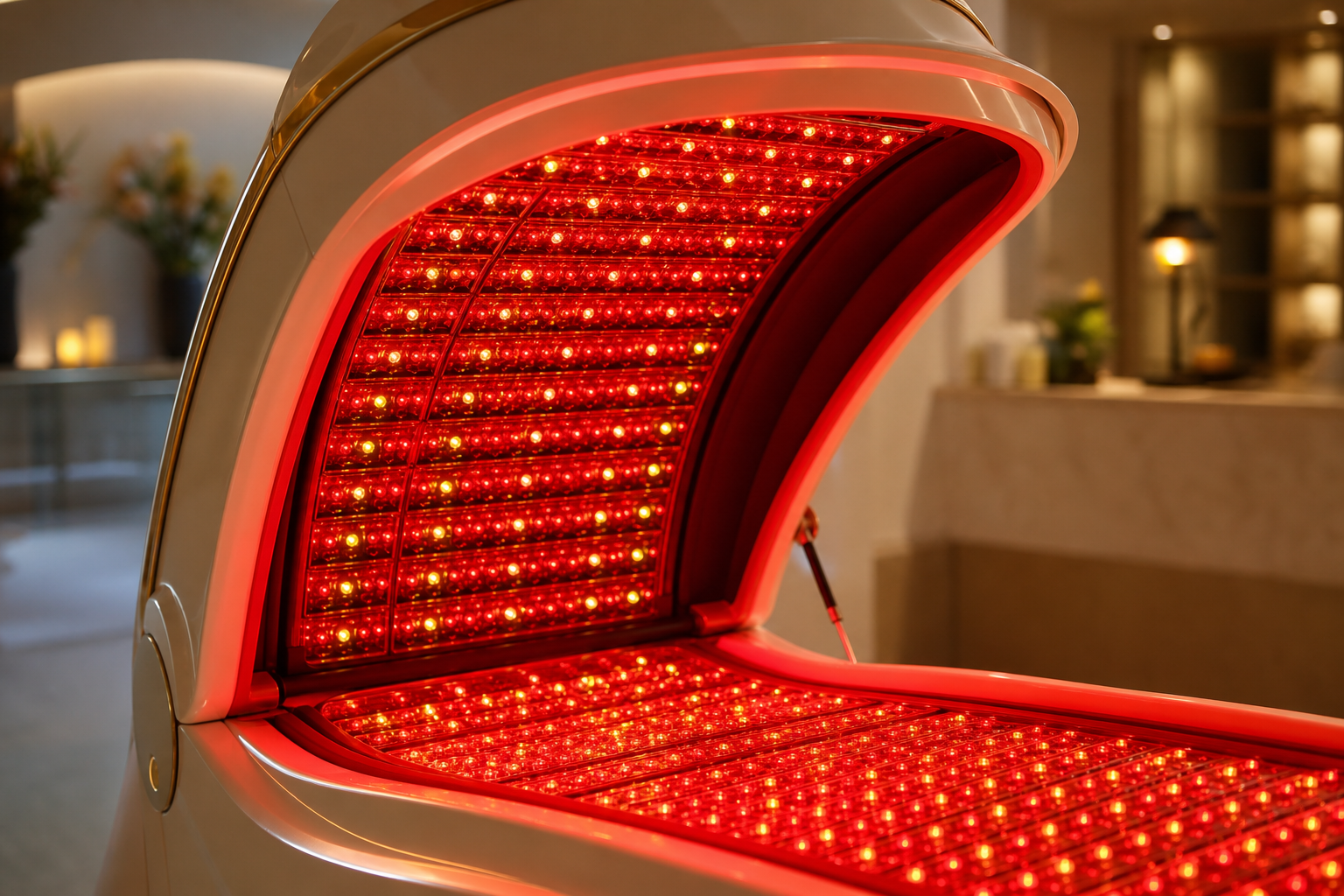
A near-infrared therapy session begins with treatment-area selection and device positioning. Depending on the system, the client may stand, sit, or lie comfortably near a light panel. The experience is generally relaxing. Some people notice mild warmth, while others notice little sensation at all because near-infrared wavelengths are not visible.
Session duration and frequency depend on the equipment and the objective. A protocol for general wellness maintenance may look different from one structured around athletic recovery or temporary localized discomfort. Consistency may matter more than intensity, and changes, if noticed, are often gradual rather than immediate.
A polished protocol also considers timing. An athlete may prefer sessions around training cycles, while a busy executive may use them as part of a scheduled recovery routine. The goal is purposeful integration, not adding treatments simply because they are available.
Safety, Screening, and When to Pause
Near-infrared therapy is not appropriate for every person or every circumstance. Screening is required, particularly for clients with a history of photosensitivity, active or suspected cancer, recent procedures, unexplained symptoms, eye conditions, or use of medications that can increase light sensitivity. Pregnancy, implanted devices, and active dermatologic concerns also warrant individualized discussion.
Eye protection should be used when indicated by the device and treatment plan. Clients should disclose all medications, supplements, relevant diagnoses, and recent treatments during a private consultation. This allows the provider to determine whether light-based therapy is suitable, whether parameters should be modified, or whether another form of care is more appropriate.
Near-infrared therapy should never delay evaluation for persistent pain, sudden functional changes, concerning skin findings, neurologic symptoms, or other issues that merit medical attention. Results vary, and candidacy should be based on clinical judgment rather than a generic online checklist.
A Concierge Approach to Photobiomodulation
For clients in Rancho Palos Verdes and West Palm Beach, near-infrared therapy can be considered within a private, consultation-based wellness plan. It may be paired thoughtfully with complementary advanced wellness therapies such as IV therapy, NAD+ therapy, hyperbaric oxygen therapy, recovery-focused red light protocols, or a CTOI Cellular Optimization Report, depending on individual goals and screening.
The value is not in assembling the longest possible menu of services. It is in selecting a measured protocol with a clear purpose, appropriate cadence, and ongoing attention to how the client feels and performs.
A private consultation can clarify whether near-infrared therapy belongs in your recovery or longevity plan, and what a responsible, personalized protocol may look like for your lifestyle.
Ready to talk with our team?
Book a complimentary consultation at our Rancho Palos Verdes or West Palm Beach clinic.
Request a ConsultationRelated services
Photobiomodulation outcomes depend on wavelength, dose, device, and protocol. Even where consensus documents describe potential mechanisms, whole-body PBM evidence for performance and recovery remains limited and is not established as a proven wellness intervention.
- Evidence-based consensus on photobiomodulation therapy (PMID 40253006)
Peer-reviewed evidence-based consensus (PMID 40253006)
Evidence-based consensus statement on photobiomodulation emphasizing that outcomes are highly wavelength-, dose-, and protocol-specific and cannot be generalized across devices or indications.
- Systematic review of whole-body photobiomodulation therapy (PMID 39883205)
Peer-reviewed systematic review (PMID 39883205)
Systematic review concluding that included whole-body PBM studies do not demonstrate benefit for exercise performance or recovery; evidence remains limited.
References describe general evidence, safety, or regulatory context. They do not establish an individual benefit for any specific person, and they do not validate EBO2's proprietary clinic protocols.
Related reading
More from the EBO2 Therapy and Wellness library.

How to Prepare an NAD Infusion in a Clinical Setting
Learn how to prepare an NAD infusion in a supervised clinical setting, from screening and pharmacy sourcing to pacing, monitoring, and aftercare planning.
ReadTop IV Nutrients for Energy: A Clinical Guide
Explore top IV nutrients for energy, from B vitamins to magnesium and NAD+, with physician-guided considerations for personalized wellness support today.
Read
HBOT Versus Oxygen Chambers: What Changes?
HBOT versus oxygen chambers: learn how pressure, oxygen delivery, screening, and clinical oversight differ when selecting a personalized wellness protocol.
ReadMedical Disclaimer: Information on this website is for educational purposes only and is not intended to diagnose, treat, cure, or prevent any disease. It is not a substitute for medical advice. Individual results vary. Consult a qualified healthcare provider before beginning any treatment.