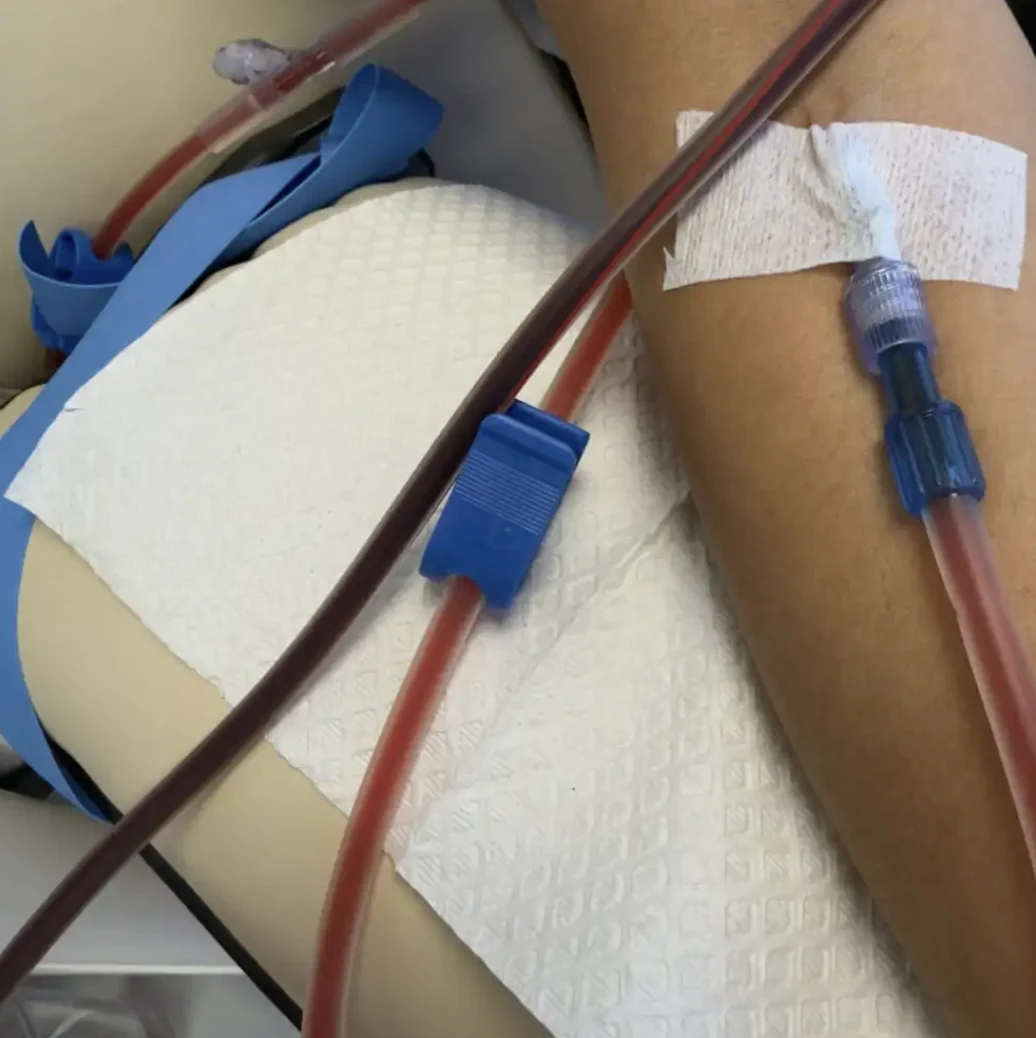
Searching EBO3 versus EBOO protocols can be confusing because the terms are often used interchangeably, even when clinics are describing different equipment, treatment workflows, or levels of clinical oversight. The more useful question is not which label sounds more advanced. It is whether the protocol is appropriate for your goals, health history, current medications, and tolerance for an extracorporeal oxygenation-focused therapy.
At EBO2 Therapy and Wellness, EBO3 Therapy is the primary term used for a physician-supervised, consultation-based oxygenation-focused service. EBOO Therapy and EBO2 Therapy may appear as alternate search terms, but a private consultation should clarify the actual system, treatment plan, screening process, and supportive therapies being considered.
Quick Answer: EBO3 Versus EBOO Protocols
EBOO generally refers to extracorporeal blood oxygenation and ozonation, a category of therapy in which blood is circulated through specialized equipment, exposed to a controlled oxygen-ozone mixture, and returned through a closed clinical circuit. EBO3 is commonly used to describe a newer-generation or more advanced approach within this category, although terminology is not standardized across every provider or device manufacturer.
That distinction matters. Two clinics may use the phrase “EBOO protocol” while offering notably different treatment durations, processing methods, filtration components, anticoagulation approaches, monitoring standards, and adjunctive wellness services. A protocol should therefore be evaluated by its clinical design and oversight, not by its name alone.
Also Known As: EBO Therapy, EBO2 Therapy, and EBOO Therapy
Online searches frequently use EBO Therapy, EBO2 Therapy, EBOO Therapy, and EBO3 Therapy to refer to related extracorporeal wellness modalities. The terms can overlap, particularly in consumer-facing discussions. However, they should not be assumed to mean identical procedures.
In a high-touch clinical setting, the provider should explain what the chosen terminology means at that practice. This includes whether the session uses an oxygen-ozone process, what blood handling and circulation system is involved, how long the appointment may take, and what monitoring is provided during the session.
For clients comparing providers in Southern California or South Florida, this conversation is more valuable than a broad claim that one acronym is categorically superior. Technology matters, but thoughtful patient selection and personalized planning matter just as much.
What Actually Changes Between Protocols
The EBO3 versus EBOO discussion is often framed as a simple technology comparison. In practice, the differences may be operational and clinical rather than dramatic from one acronym to the next.
Equipment and circuit design
Different systems may use different components to circulate and process blood outside the body. The design of the circuit, the materials used, the way gases are introduced, and whether additional filtration elements are incorporated can all vary. These details influence how a provider plans a session and what monitoring is appropriate.
A premium practice should be transparent without overwhelming the client with technical jargon. The goal is to explain how the selected system fits into a broader provider-guided wellness plan, not to imply that a machine alone determines outcomes.
Session structure and dosing decisions
Protocols can differ in circulation time, the amount of blood processed over a session, gas concentration parameters, and whether the provider recommends a single session, a limited series, or periodic reassessment. These choices should be individualized rather than presented as a fixed recipe for every person.
For example, an executive seeking recovery support after intensive travel may have different priorities from an athlete focused on training recovery or a longevity-focused client building a more comprehensive cellular wellness plan. Baseline wellness, hydration, vein access, laboratory considerations, and prior response to therapies can all shape the approach.
Supportive therapies around the appointment
EBO3 Therapy is often considered alongside other advanced wellness therapies, not in isolation. Depending on screening and goals, a personalized protocol may include IV Therapy for hydration and nutrient support, glutathione support, NAD+ Therapy, Hyperbaric Oxygen Therapy, red light therapy, or a CTOI Cellular Optimization Report.
These are not interchangeable services, and combining them is not automatically appropriate. The value of a concierge model is that timing, sequencing, and overall treatment burden can be considered carefully rather than adding therapies simply because they are available.
Why Physician Supervision Is Central
Extracorporeal therapies require a higher level of planning than a standard wellness appointment. A physician-supervised setting should begin with a private consultation, health-history review, medication review, and discussion of realistic wellness goals.
Screening may include consideration of cardiovascular history, clotting or bleeding considerations, relevant laboratory findings, venous access, hydration status, current supplements, and medications that could affect procedural planning. Not every client is a candidate, and a responsible provider may recommend a different service, defer treatment, or request further medical clearance.
During the appointment, trained clinical staff should follow established protocols for setup, observation, and response to any concerns that arise. This is especially relevant for clients who value discretion but do not want convenience to come at the expense of clinical standards.
What EBO3 Therapy May Support
Within a personalized wellness program, EBO3 Therapy may be selected to support oxygenation-focused wellness, recovery support, cellular vitality, detox pathway support, performance optimization, and longevity-focused care. Some clients also explore it as part of a broader plan for demanding schedules, frequent travel, or intensive training blocks.
These are wellness-oriented goals, not promises of disease treatment or guaranteed outcomes. Individual responses vary, and no protocol should replace appropriate diagnosis, medical treatment, or ongoing care from a qualified physician.
The most sophisticated approach begins with clarity. Are you seeking support for recovery after a demanding period? Are you building a long-range healthy-aging strategy? Are you looking to organize several advanced wellness therapies into a more intentional plan? The answer helps determine whether EBO3 Therapy belongs in the protocol at all.
What to Expect From a Private Consultation
A consultation should feel measured, not sales-driven. Your provider should discuss why you are considering EBO3 or EBOO Therapy, review relevant medical information, and explain what the session may involve. You should also have a clear opportunity to ask about potential discomforts, contraindications, appointment length, recovery expectations, and whether companion therapies are being recommended for a specific reason.
If you proceed, the care team will prepare the treatment area and establish appropriate access for the planned procedure. Because protocols and individual needs vary, the exact experience is best discussed before treatment rather than assumed from online descriptions.
Afterward, your provider may recommend hydration, rest, adjustments to training or travel plans, or follow-up based on your individual response. For some clients, reassessment is more valuable than committing in advance to an extensive series.
Choosing Between EBO3 and EBOO: Questions Worth Asking
When comparing EBO3 versus EBOO protocols, ask the provider to define the treatment rather than relying on a label. What equipment and workflow are being used? Who performs the procedure and who provides medical oversight? What screening is required? How is the protocol adjusted for medications, health history, and goals? What does the practice recommend if EBO-based therapy is not the right fit?
You may also ask how the therapy fits with services you are already receiving. Clients using peptide therapy, regenerative biologics consultations, TPE, HBOT, or intensive IV programs benefit from coordinated planning. More interventions are not necessarily better. A well-designed protocol respects timing, recovery capacity, and the reason each therapy is included.
A More Useful Standard Than the Acronym
The EBO3 versus EBOO question deserves a precise answer, but the acronym is only the starting point. Look for a practice that can explain its process clearly, screen thoughtfully, and build recommendations around your specific wellness objectives rather than a standardized menu.
For the client who values private access and medically responsible longevity care, the right protocol is the one selected with appropriate oversight, realistic expectations, and a clear reason for every step. Screening is required, and results vary.
Ready to talk with our team?
Book a complimentary consultation at our Rancho Palos Verdes or West Palm Beach clinic.
Request a ConsultationRelated services
EBO3 is a clinic-branded wellness protocol. These references describe ozone's regulatory context and the state of the published evidence; they do not establish EBO3 as a treatment for any disease, and ozone therapy is not FDA-approved. Published EBOO/ozone literature is heterogeneous, largely preliminary or uncontrolled, and mostly of low or very-low certainty.
- 21 CFR § 801.415 — Federal regulation on ozone (labeling context)
eCFR (U.S. Electronic Code of Federal Regulations)
Federal labeling regulation for medical devices generating ozone. Regulatory context only; does not indicate FDA approval of ozone as a therapy.
- Bocci V. Ozone as Janus: this controversial gas can be either toxic or medically useful
Mediators of Inflammation (PMID 16156950)
Narrative review discussing extracorporeal blood oxygenation with ozone (EBOO) and related ozone modalities. Evidence at the time was preliminary and largely uncontrolled — insufficient to validate EBOO for any disease indication.
- Umbrella review of ozone therapy across clinical indications
Medical Sciences (DOI 10.3390/medsci14020289)
Umbrella review of systematic reviews of ozone therapy across multiple indications. Findings are heterogeneous with most conclusions rated low or very-low certainty; overall evidence remains insufficient to establish general clinical efficacy.
- Smith NL et al. Ozone therapy: an overview of pharmacodynamics, current research, and clinical utility
Medical Gas Research (PMID 29152215)
Peer-reviewed overview of ozone therapy noting that the current clinical evidence base is heterogeneous and further rigorous study is needed.
References describe general evidence, safety, or regulatory context. They do not establish an individual benefit for any specific person, and they do not validate EBO2's proprietary clinic protocols.
- EBO3 Therapy Preparation Before Your Visit
- What Happens During EBOO Therapy in a Session?
- Private TPE Consultation Guide for Personalized Care
- Ozone Therapy Benefits for Recovery and Wellness
- What Private Physician Supervised Wellness Means
- Can Plasma Exchange Support Wellness Goals?
- What Happens at a Plaque X Therapy Consultation
Related reading
More from the EBO2 Therapy and Wellness library.

Plasma Exchange Versus Plasmapheresis Explained
Plasma exchange versus plasmapheresis: learn how these terms differ, what a TPE procedure involves, and why clinical screening and guidance matter most.
Read
Concierge IV Therapy Guide: What to Expect
This concierge IV therapy guide explains screening, personalized protocols, infusion visits, and when physician-supervised care may be the right fit now.
Read
Near Infrared Therapy Benefits: What to Know
Explore near infrared therapy benefits, what photobiomodulation sessions involve, who may be a fit, and why screening and personalized protocols matter.
ReadMedical Disclaimer: Information on this website is for educational purposes only and is not intended to diagnose, treat, cure, or prevent any disease. It is not a substitute for medical advice. Individual results vary. Consult a qualified healthcare provider before beginning any treatment.