For clients who value privacy, precision, and a clear clinical plan, the question is not simply whether to pursue advanced wellness therapy. It is what the experience actually involves. What happens during EBOO is a structured, provider-guided process in which blood is circulated through a specialized extracorporeal system, processed according to the treatment protocol, and returned while the client is carefully observed.
At EBO2 Therapy and Wellness, the primary service is referred to as EBO3 Therapy. EBOO Therapy, EBO2 Therapy, EBO Therapy, and EBO treatment are terms often used in online searches and patient conversations. The appropriate protocol, if any, is determined only after a private consultation, health review, and screening.
A quick answer: what happens during EBOO?
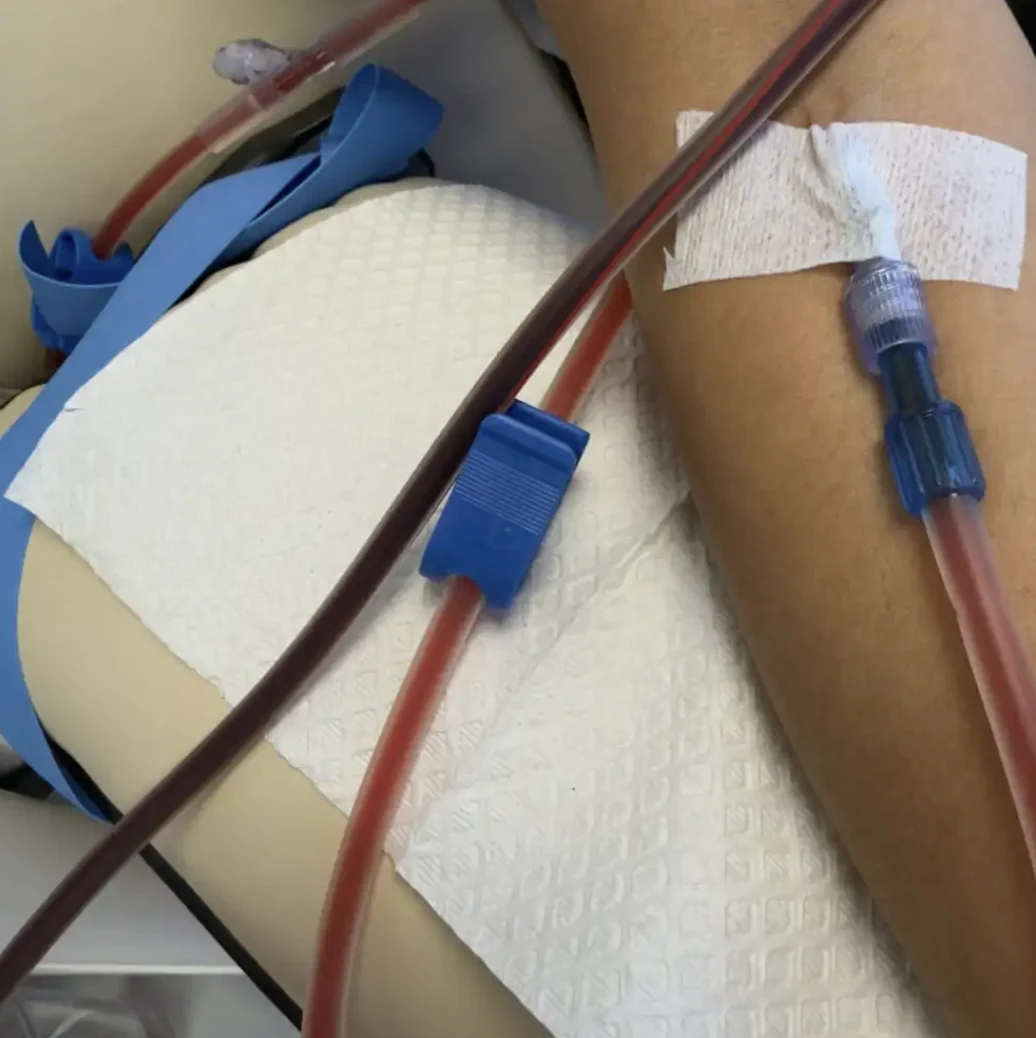
EBOO is commonly used to describe extracorporeal blood oxygenation and ozonation. During a session, a qualified clinical team establishes venous access and circulates blood through a closed, medical-grade system. Within that system, the blood may be exposed to a carefully controlled oxygen-ozone mixture before being returned to the body. The precise equipment, flow rate, volume, anticoagulation approach, and session duration depend on the provider-guided protocol and the client’s individual health profile.
This is not the same as a standard IV infusion. EBO3 Therapy is an oxygenation-focused, extracorporeal procedure requiring specialized equipment, trained clinical oversight, and appropriate screening. Clients generally remain comfortably seated or reclined during treatment while the care team monitors the process.
The experience is designed to support cellular wellness, recovery support, oxygenation-focused goals, and detox pathway support. It is not represented as a cure, disease treatment, or a substitute for conventional medical care. Individual responses and outcomes vary.
EBO3 Therapy, EBOO, and EBO2: understanding the terminology
The terminology can be confusing because different practices, manufacturers, and online sources use overlapping names. EBOO is a widely searched phrase for extracorporeal blood oxygenation and ozonation. EBO2 Therapy and EBO Therapy are also commonly used alternate terms. At EBO2 Therapy and Wellness, EBO3 Therapy is the main official name used for this advanced oxygenation service.
What matters more than the label is the clinical process behind it: appropriate candidacy review, the quality and configuration of the system, sterile technique, patient monitoring, and a personalized plan that fits the client’s broader wellness priorities.
For some clients, EBO3 Therapy may be considered as one part of a longevity-focused protocol alongside IV Therapy, NAD+ Therapy, glutathione support, Hyperbaric Oxygen Therapy, red light therapy, or a CTOI Cellular Optimization Report. Others may be better suited to a different approach. A responsible recommendation begins with the individual, not a pre-set package.
What to expect before an EBO3 Therapy session
The first stage is consultation-based. A provider reviews your health history, current medications and supplements, relevant diagnoses, prior procedures, wellness objectives, and any factors that could affect eligibility. Depending on the clinical situation, the team may request laboratory information or coordinate with your treating physician.
This screening matters. Extracorporeal therapies are not appropriate for everyone, and physician-supervised care should never be reduced to a quick booking decision. Considerations can include vascular access, bleeding or clotting history, use of anticoagulant medications, cardiovascular status, active symptoms, pregnancy status, and other individualized factors.
If you are cleared to proceed, you may receive practical preparation guidance. This can include arriving well hydrated, eating appropriately beforehand unless directed otherwise, wearing comfortable clothing, and bringing an accurate list of medications and supplements. Do not stop or alter prescribed medication without direction from the clinician managing that medication.
Inside the treatment room
A private EBO3 Therapy session begins with identity confirmation, a review of the planned protocol, and baseline assessment as appropriate. The clinical team then places venous access, typically using lines designed to support the selected flow and treatment plan. You may feel the brief pinch associated with IV placement, but the goal is a calm, closely attended experience.
Blood is then circulated from the body through the extracorporeal system in controlled increments. In EBOO-style protocols, the system introduces an oxygen-ozone mixture under defined parameters before the blood is returned. The procedure is continuous and measured, not a rapid infusion or an unsupervised wellness service.
Throughout the session, the team monitors how you are feeling and can adjust or pause treatment if clinically indicated. Clients often use the time to rest, listen to music, or simply disconnect. Session length varies based on the protocol, equipment, access, and clinical considerations. Your provider should give you a more specific expectation before treatment rather than promising a one-size-fits-all timeline.
Some protocols may incorporate ultraviolet blood irradiation or other system-specific steps, while others may not. This is one reason online descriptions of EBOO can be inconsistent. Ask exactly which components are proposed for your session and why they are being considered in your personalized protocol.
What might you feel during and after treatment?
Many clients describe the session as quiet and uneventful once access is established. Mild sensations can include temporary coolness in the arm, awareness of the IV lines, or fatigue from reclining for an extended period. The care team should be informed immediately of discomfort, lightheadedness, pain at the access site, shortness of breath, chest symptoms, or any unexpected change in how you feel.
Afterward, the lines are removed, the access sites are dressed, and you are given post-session instructions. Some people prefer to keep the remainder of the day light and well hydrated. Others return to their normal routines, depending on how they feel and what their provider recommends. Recovery experiences vary, particularly when EBO3 Therapy is part of a broader program.
A premium clinical setting does not mean ignoring the practical realities of a procedure. Bruising, irritation, or discomfort at an IV site can occur. As with any intervention involving venous access, circulation outside the body, and individualized protocol decisions, there are potential risks and contraindications. The purpose of screening, sterile technique, physician oversight, and monitoring is to assess and manage those considerations thoughtfully.
Safety, screening, and medically responsible care
EBO3 Therapy should be approached as an advanced wellness service, not as a universal solution. A quality practice will discuss whether the therapy aligns with your goals, what is known and not known about expected wellness effects, relevant alternatives, and circumstances in which it should be postponed or avoided.
Be candid during screening. Share medical conditions, medications, recent illness, implanted devices, prior reactions to procedures, and any history of anemia, bleeding, clotting, or vascular challenges. This information supports better decision-making and may change the recommended plan.
Clients seeking support for significant symptoms or diagnosed medical conditions should maintain care with their primary physician and appropriate specialists. EBO3 Therapy is not intended to replace diagnostic evaluation, emergency care, or indicated medical treatment.
Who may be interested in EBO3 Therapy?
Adults pursuing private, longevity-focused wellness care may ask about EBO3 Therapy for oxygenation support, recovery support, cellular vitality, performance optimization, or support for healthy lifestyle practices. Frequent travelers, high-performing professionals, athletes, and clients building a more comprehensive wellness plan are often interested in a consultation.
Interest alone does not establish candidacy. The best candidates are those willing to complete appropriate screening, discuss realistic goals, and follow a provider-guided plan rather than chase an aggressive or generic protocol.
A personalized next step
EBO2 Therapy and Wellness offers physician-supervised, consultation-based EBO3 Therapy in Rancho Palos Verdes, California, and West Palm Beach, Florida. For clients traveling from the South Bay, Los Angeles, Orange County, Palm Beach, Jupiter, Boca Raton, or surrounding communities, the focus remains the same: discreet access, careful screening, and advanced wellness therapies selected with intention.
The right question is not whether EBOO is a shortcut. It is whether an EBO3 Therapy protocol fits your health history, current priorities, and long-term approach to cellular wellness. A private consultation provides the clarity needed to make that decision responsibly.
Ready to talk with our team?
Book a complimentary consultation at our Rancho Palos Verdes or West Palm Beach clinic.
Request a ConsultationRelated services
EBO3 is a clinic-branded wellness protocol. These references describe ozone's regulatory context and the state of the published evidence; they do not establish EBO3 as a treatment for any disease, and ozone therapy is not FDA-approved. Published EBOO/ozone literature is heterogeneous, largely preliminary or uncontrolled, and mostly of low or very-low certainty.
- 21 CFR § 801.415 — Federal regulation on ozone (labeling context)
eCFR (U.S. Electronic Code of Federal Regulations)
Federal labeling regulation for medical devices generating ozone. Regulatory context only; does not indicate FDA approval of ozone as a therapy.
- Bocci V. Ozone as Janus: this controversial gas can be either toxic or medically useful
Mediators of Inflammation (PMID 16156950)
Narrative review discussing extracorporeal blood oxygenation with ozone (EBOO) and related ozone modalities. Evidence at the time was preliminary and largely uncontrolled — insufficient to validate EBOO for any disease indication.
- Umbrella review of ozone therapy across clinical indications
Medical Sciences (DOI 10.3390/medsci14020289)
Umbrella review of systematic reviews of ozone therapy across multiple indications. Findings are heterogeneous with most conclusions rated low or very-low certainty; overall evidence remains insufficient to establish general clinical efficacy.
- Smith NL et al. Ozone therapy: an overview of pharmacodynamics, current research, and clinical utility
Medical Gas Research (PMID 29152215)
Peer-reviewed overview of ozone therapy noting that the current clinical evidence base is heterogeneous and further rigorous study is needed.
References describe general evidence, safety, or regulatory context. They do not establish an individual benefit for any specific person, and they do not validate EBO2's proprietary clinic protocols.
Related reading
More from the EBO2 Therapy and Wellness library.

What a Regenerative Biologics Consultation Covers
A regenerative biologics consultation reviews goals, history, screening, and personalized wellness options with a physician-guided concierge care team.
Read
Can NAD IV Support Focus? A Clinical View
Can NAD IV support focus? Learn how physician-guided NAD+ therapy may fit a personalized plan for cognitive wellness, energy, recovery, and longevity care.
Read
How to Plan HBOT Sessions for Better Recovery
Learn how to plan HBOT sessions with physician-guided timing, screening, and realistic recovery and cellular wellness goals for a personalized protocol.
ReadMedical Disclaimer: Information on this website is for educational purposes only and is not intended to diagnose, treat, cure, or prevent any disease. It is not a substitute for medical advice. Individual results vary. Consult a qualified healthcare provider before beginning any treatment.