A hyperbaric oxygen session is easy to schedule. Planning a meaningful series is more nuanced. If you are researching how to plan HBOT sessions, begin with the reason you are considering hyperbaric oxygen therapy, your medical history, and the pace your provider recommends - not a generic package or a calendar built around convenience alone.
For performance-minded clients, frequent travelers, active adults, and those focused on cellular wellness, HBOT is best approached as a provider-guided component of a broader longevity plan. Session frequency, chamber pressure, duration, and the total number of visits should reflect your screening, recovery demands, tolerance, and objectives. Results vary.
Quick answer: how to plan HBOT sessions
Plan HBOT after a private consultation and clinical screening. Your provider should identify the goal of care, review relevant health history and medications, determine whether hyperbaric exposure is appropriate, and establish a starting schedule that can be adjusted based on how you respond.
A session plan commonly includes an initial series of appointments rather than a one-time visit. The exact cadence depends on the type of chamber, the pressure protocol, your availability, and whether HBOT is being incorporated for recovery support, oxygenation-focused wellness, travel recovery, or a more individualized clinical objective. More sessions are not automatically better. Consistency and appropriate oversight matter more than an aggressive schedule.
What HBOT is also called
Hyperbaric oxygen therapy, or HBOT, is also commonly called oxygen chamber therapy or hyperbaric chamber therapy. During a session, a client breathes oxygen in a pressurized chamber according to the prescribed protocol. The controlled increase in environmental pressure is what distinguishes HBOT from standard oxygen administration.
Not all oxygen-related services use the same equipment or follow the same clinical parameters. Soft-sided and hard-sided chambers, for example, may operate differently. Ask what type of chamber is being used, what pressure range is planned, who supervises the session, and how the protocol was selected. These details are central to an informed decision.
Start with the outcome, not the number of sessions
A thoughtful HBOT plan begins by defining what you want to support. An executive returning from repeated long-haul travel may be looking for recovery support and a more structured wellness routine. An athlete may be considering HBOT alongside sleep, nutrition, physical therapy, and training modifications. Another client may be pursuing oxygenation-focused support as part of a broader longevity-focused protocol.
Those goals may sound similar, but they do not always call for the same schedule. Your provider may recommend a concentrated introductory series, a lower-frequency plan, or a reassessment after several sessions. The practical question is not, “How many sessions does everyone need?” It is, “What schedule fits my goals, screening findings, and overall program?”
At EBO2 Therapy and Wellness, this distinction is central to concierge care. A personalized protocol should account for the full picture rather than treating HBOT as an isolated appointment on a menu.
Build a schedule you can actually complete
HBOT planning is partly clinical and partly logistical. A carefully designed schedule provides little value if business travel, training demands, or family responsibilities make adherence unrealistic. During your consultation, be candid about your calendar for the coming weeks, including flights, major events, competition dates, and recovery windows.
For some clients, several visits per week may be practical during a defined recovery-focused period. Others may prefer a steadier rhythm that integrates with an existing wellness program. If you anticipate missing several appointments, ask whether it makes more sense to delay the start date rather than beginning a series that will be repeatedly interrupted.
It is also wise to avoid scheduling your first session immediately before a high-stakes meeting, intense workout, or flight. While many people tolerate sessions well, your first experience is the right time to learn how your ears respond to pressure changes and how you feel afterward. Allowing space in your schedule gives you room to communicate useful feedback to your provider.
Plan around pressure equalization
Ear pressure management is one of the most practical considerations in HBOT. During compression and decompression, you will need to equalize pressure in your ears, much like during an airplane descent. Your team should explain techniques such as swallowing, yawning, or gentle pressure-equalization methods before the session begins.
Do not plan to push through significant congestion, ear discomfort, or an active upper respiratory illness without speaking with your provider. Sinus or ear issues can affect comfort and may lead the team to postpone or modify a session. This is not a setback. It is appropriate clinical judgment.
Use baseline information to guide the protocol
Wellness goals are personal, but they should still be measurable. Before beginning, identify a small number of markers you and your provider can revisit. Depending on your goals, these may include perceived recovery, training readiness, sleep quality, energy patterns, travel resilience, or cognitive performance in daily work.
Keep the observations simple. A brief note after each visit about comfort, ear equalization, sleep, exercise tolerance, and any unusual response is often more useful than trying to track everything. Over time, this information helps your provider decide whether to maintain the cadence, adjust timing, or discuss whether other advanced wellness therapies may better complement your plan.
Avoid judging an entire protocol by a single session. Likewise, do not assume that a subjective change means you should independently increase frequency. HBOT planning should remain provider-guided, especially when it is part of a wider program involving IV therapy, NAD+ therapy, red light therapy, peptide consultation, or EBO3 Therapy.
Screening and safety should shape every plan
Screening is required before HBOT. A physician-supervised practice should review your health history, current symptoms, medications and supplements, prior ear or sinus concerns, lung history, and any factors that may affect suitability for pressurized oxygen exposure. Certain conditions, recent procedures, and medications may require additional evaluation, protocol changes, or a decision not to proceed.
Be especially transparent about respiratory symptoms, ear surgery or chronic ear concerns, sinus congestion, claustrophobia, seizure history, and prescription medications. Do not minimize a symptom to keep an appointment. A private, medically responsible setting is designed to make these conversations straightforward and confidential.
Ask in advance about preparation requirements. Your provider may give instructions related to clothing, cosmetics, personal items, hydration, meals, and the timing of medications. Chamber safety rules are specific for a reason, so follow them precisely. If a new symptom develops between visits, contact the practice before arriving rather than assuming the session should proceed as planned.
Know when to reassess instead of adding sessions
A polished protocol includes decision points. After an initial sequence of visits, your provider should revisit your goals, tolerance, schedule, and the value the program is providing within your larger routine. This is the moment to decide whether to continue, adjust the interval between sessions, take a pause, or redirect attention to another area of your wellness plan.
Reassessment is particularly useful for clients combining services. HBOT may fit well alongside recovery support, photobiomodulation, IV therapy, or personalized longevity planning, but stacking multiple modalities into the same week is not automatically the most sophisticated approach. The right sequencing depends on your capacity, clinical context, and desired experience.
Questions to ask before you commit
Before scheduling a series, ask who oversees the protocol, what chamber type and pressure range are used, how session duration is determined, and what happens if you cannot comfortably equalize your ears. You should also ask how the team handles changes in health status, whether progress will be reviewed, and how HBOT may fit with your existing wellness routine.
Clear answers are a sign of a well-run, consultation-based program. Be cautious of anyone who promises a fixed number of sessions will deliver a particular result or suggests that screening is merely a formality. Personalized care requires room for clinical judgment.
Available through private concierge care
Clients seeking HBOT at EBO2 Therapy and Wellness can request a private consultation at the Rancho Palos Verdes, California, or West Palm Beach, Florida concierge locations. The purpose of that conversation is to determine whether an oxygenation-focused plan aligns with your needs and, if appropriate, to organize care around your lifestyle and broader cellular wellness goals.
The best HBOT schedule is not the busiest one. It is the one that respects screening, supports a clearly defined objective, fits your real life, and gives your provider enough information to refine the plan with care.
Ready to talk with our team?
Book a complimentary consultation at our Rancho Palos Verdes or West Palm Beach clinic.
Request a ConsultationRelated services
FDA clearance covers specified hyperbaric chambers, and accepted clinical use is tied to specific conditions, pressures, and protocols documented by UHMS. General wellness or anti-aging claims are not FDA-cleared uses, and Cochrane reviews continue to describe limited or inconclusive evidence outside those accepted indications.
- FDA letter to health care providers — Follow Instructions for Safe Use of Hyperbaric Oxygen Therapy Devices
U.S. Food & Drug Administration
FDA safety communication distinguishing FDA-cleared HBOT chambers and their labeled indications from wellness marketing claims.
- UHMS Hyperbaric Oxygen Therapy Indications — 15th Edition (front matter & references)
Undersea and Hyperbaric Medical Society
UHMS indications manual defining accepted HBOT indications with condition-specific protocols. Accepted uses are narrow and protocol-defined; not a blanket wellness endorsement.
- Cochrane systematic review of hyperbaric oxygen therapy (PMID 26106870)
Cochrane Database of Systematic Reviews (PMID 26106870)
Cochrane review describing limited and often inconclusive evidence for HBOT outside its accepted indications — supports the condition/protocol-specific framing above.
References describe general evidence, safety, or regulatory context. They do not establish an individual benefit for any specific person, and they do not validate EBO2's proprietary clinic protocols.
Related reading
More from the EBO2 Therapy and Wellness library.
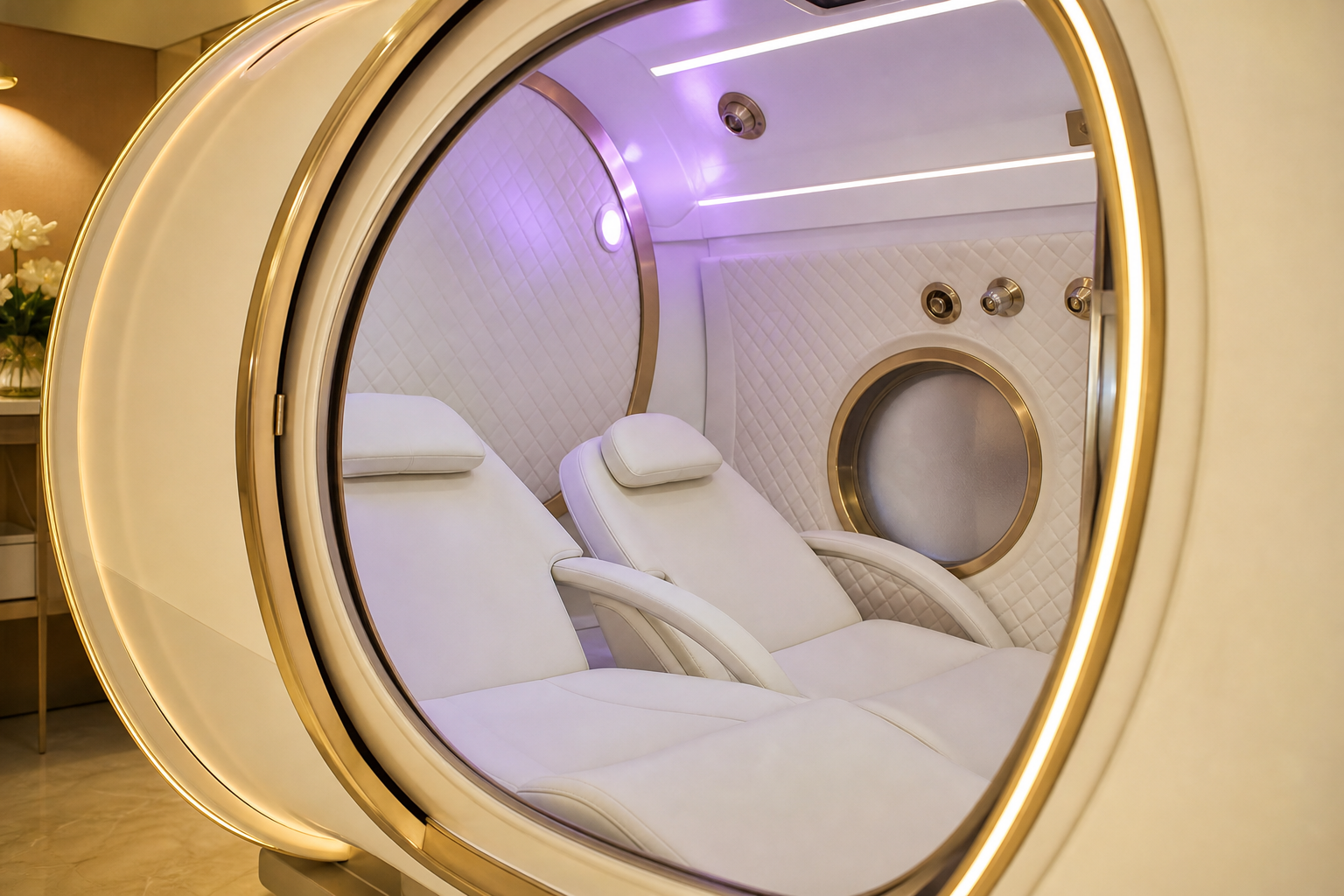
Hyperbaric Oxygen Session Guide for First Visits
A hyperbaric oxygen session guide for first-time clients: preparation, chamber experience, pressure changes, screening, and personalized care planning.
Read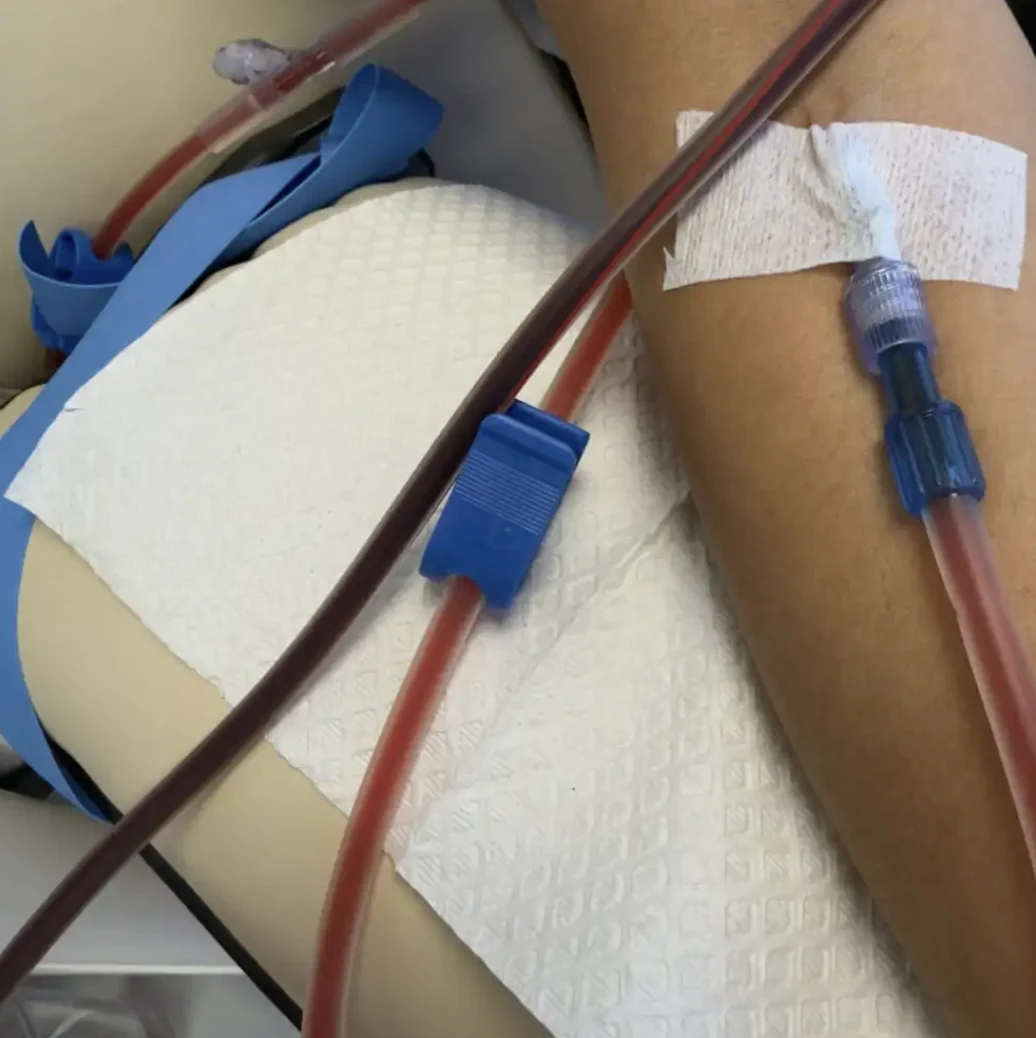
EBOO Therapy vs HBOT: Which Fits Your Goals?
Compare eboo therapy vs hbot for oxygenation-focused wellness, recovery support, screening, comfort, and a personalized physician-guided plan discussion.
ReadHow to Prepare for HBOT Before Your First Session
Learn how to prepare for HBOT with physician-guided screening, chamber-day essentials, pressure-equalization tips, and personalized recovery planning.
ReadMedical Disclaimer: Information on this website is for educational purposes only and is not intended to diagnose, treat, cure, or prevent any disease. It is not a substitute for medical advice. Individual results vary. Consult a qualified healthcare provider before beginning any treatment.