A demanding travel schedule, a high-volume training block, or an extended period of mental output can leave the body feeling slower to recover than usual. Photobiomodulation therapy is a light-based wellness modality designed to support cellular wellness, recovery support, and performance-focused routines without downtime or invasive procedures.
It is not a one-size-fits-all service. The wavelength, exposure area, session schedule, health history, and broader wellness plan all influence whether near-infrared and red-light sessions are appropriate. For clients pursuing longevity-focused care, the most useful question is not simply whether light therapy is available, but whether it is being applied thoughtfully within a personalized protocol.
What is photobiomodulation therapy?
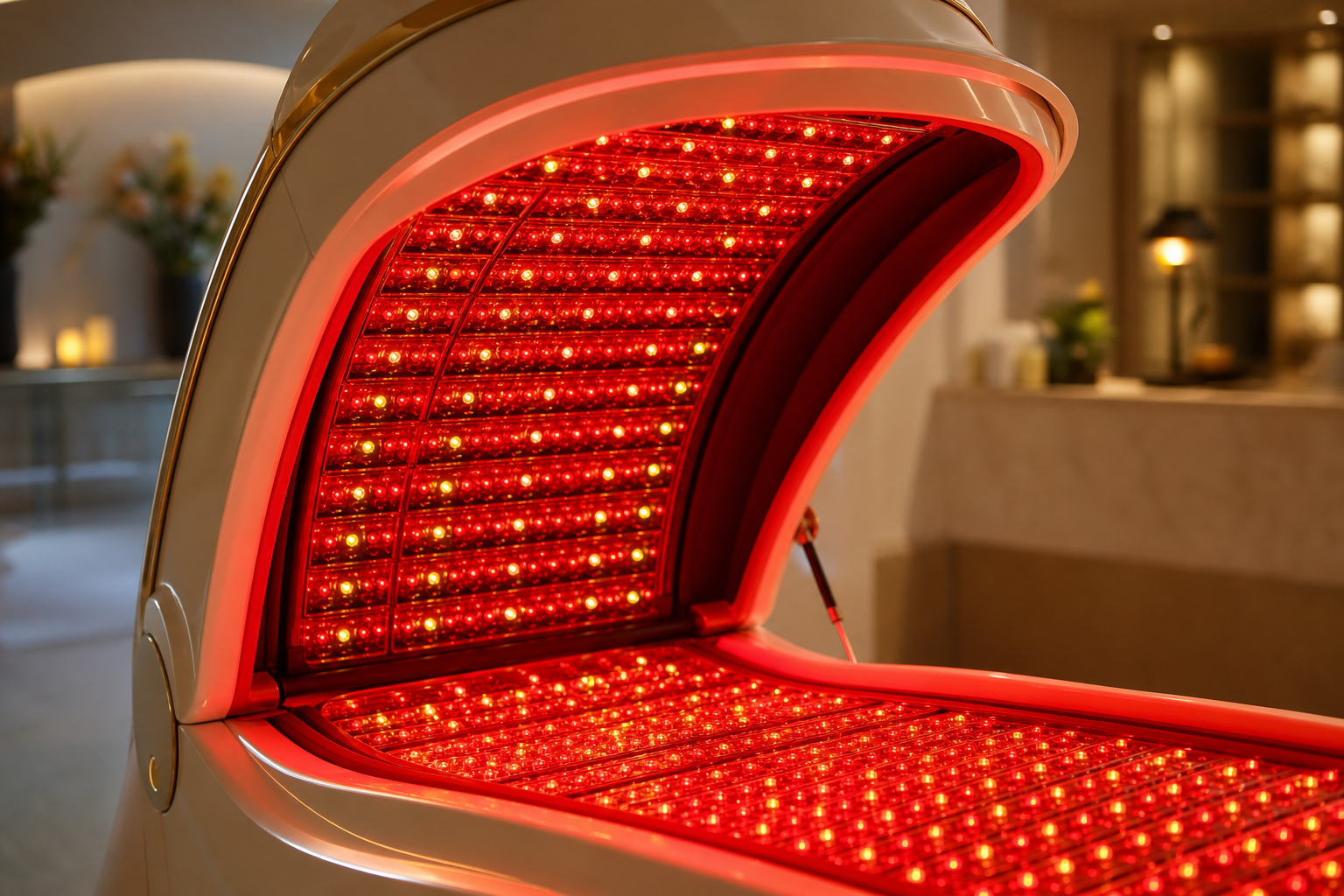
Photobiomodulation therapy, often abbreviated as PBM, uses specific wavelengths of red and near-infrared light delivered through clinical-grade devices. These wavelengths are selected because they can interact with light-sensitive components within cells, including structures involved in cellular energy processes.
The practical goal is support, not a promise of a particular medical outcome. Depending on the protocol and individual context, PBM may support recovery, circulation-related wellness goals, temporary post-exercise comfort, skin-focused wellness, and cellular vitality. Research across light wavelengths and applications continues to develop, and outcomes can vary considerably by device, dose, treatment area, and person.
Unlike ultraviolet light, red and near-infrared light used for PBM do not work by tanning the skin. A properly selected session is typically warm or neutral in sensation, quiet, and noninvasive. It is often incorporated into a broader recovery or longevity plan rather than positioned as a standalone answer.
Also known as red light or near-infrared therapy
People commonly search for red light therapy, near-infrared therapy, low-level light therapy, low-level laser therapy, or LED light therapy when they mean photobiomodulation. These terms overlap, but they are not always interchangeable.
Consumer red-light devices vary widely in output, wavelength range, treatment area, and quality control. A provider-guided photobiomodulation protocol begins with a different standard: identifying the intended wellness objective, selecting an appropriate device and exposure plan, and considering contraindications before a session begins. More power is not automatically better. Light dosing has meaningful variables, including distance from the device, session length, frequency, and the target tissue depth.
Why clients consider photobiomodulation therapy
Many clients interested in PBM are already attentive to sleep, training, nutrition, and stress management. They may be seeking a refined recovery option that fits a demanding professional or athletic calendar without requiring interruption to the day.
Photobiomodulation may be considered for recovery support after strenuous activity, support for a consistent mobility routine, cellular wellness, appearance-focused skin routines, or general performance optimization. Some clients also include it within a broader healthy-aging strategy designed around energy, resilience, and sustainable habits.
That said, the right role for PBM depends on the goal. A person looking for support around athletic recovery may have a very different protocol than someone focused on skin appearance or general vitality. It should not be used to self-manage a new injury, persistent pain, unexplained symptoms, or a condition requiring medical evaluation. Wellness care works best when it complements appropriate medical care, movement, nutrition, and recovery fundamentals.
What a provider-guided PBM session may involve
A consultation-based approach starts before the light turns on. The provider reviews relevant health history, medications, photosensitivity concerns, current goals, and other therapies under consideration. Screening is required because even noninvasive services deserve informed selection.
During a session, the client is positioned comfortably in front of or beneath a red and near-infrared light device, depending on the treatment plan. Protective eyewear may be used when appropriate, particularly when bright light is near the face. The session itself is generally brief, and most clients can return to normal daily activities immediately afterward.
A personalized protocol may recommend a defined series of sessions followed by reassessment, rather than an indefinite schedule. Consistency can matter, but so can restraint. If a client is not seeing meaningful alignment with their intended wellness goals, the plan should be adjusted rather than simply intensified.
Integrating PBM with advanced wellness therapies
For the right client, PBM can sit alongside other provider-guided services. Recovery-oriented planning may include IV Therapy, NAD+ Therapy, peptide consultation, Hyperbaric Oxygen Therapy or HBOT, and carefully selected movement or nutrition strategies. Oxygenation-focused and cellular wellness programs may also involve a discussion of EBO3 Therapy when clinically appropriate.
These services are not interchangeable, and they should not be stacked simply because they are available. Timing, individual tolerance, medical history, and the client’s priorities all matter. A premium wellness plan is defined by clinical judgment and clarity, not by the number of therapies on a calendar.
Safety, screening, and realistic expectations
Photobiomodulation is generally well tolerated in many wellness settings, but it is not suitable for everyone or every situation. A qualified provider should review photosensitizing medications or topical products, eye conditions, active cancer considerations, pregnancy status, implanted devices where relevant, and any unexplained symptoms before recommending treatment.
Clients should also be cautious with at-home devices that provide little information about wavelength, irradiance, or recommended dosing. A device can be marketed as red light therapy without offering the specifications or oversight needed for an informed decision. The device, protocol, and clinical context matter as much as the label.
Expectations should remain grounded. PBM is not designed to diagnose, cure, treat, or supports overall wellness. It may support selected wellness and recovery goals, but results vary. Progress is often best assessed in practical terms: how a client feels after training, consistency with a recovery routine, subjective energy patterns, or whether the protocol complements a broader longevity plan.
Photobiomodulation therapy at EBO2 Therapy and Wellness
EBO2 Therapy and Wellness offers private, physician-supervised concierge care for clients seeking advanced wellness therapies in Rancho Palos Verdes, California, and West Palm Beach, Florida. Photobiomodulation may be considered within a personalized protocol for cellular wellness, recovery support, and performance-focused care following appropriate screening.
The experience is designed for clients who value discretion, thoughtful planning, and provider-guided recommendations rather than generic packages. A private consultation can clarify whether red and near-infrared light therapy aligns with current goals, what an appropriate session schedule may look like, and which related services, if any, warrant consideration.
Questions clients often ask
How quickly will I notice a difference?
Some clients report noticing a subjective difference in how they feel after a session, while others evaluate PBM over a series of visits. The timeframe depends on the goal, baseline recovery habits, consistency, and individual response. Results vary, and no specific outcome should be assumed.
Is photobiomodulation the same as a tanning bed?
No. Tanning devices use ultraviolet light to stimulate pigment changes in the skin. Photobiomodulation uses selected red and near-infrared wavelengths for wellness-focused purposes and does not aim to tan the skin.
Can I combine red light therapy with HBOT or IV therapy?
Possibly, but the decision should be individualized. A provider can review timing, goals, medications, health history, and tolerance to determine whether combining services is appropriate within a personalized protocol.
The most valuable wellness technology is the technology that has a clear place in your life, your goals, and your care plan. A private consultation offers the right setting to determine whether photobiomodulation belongs there.
Ready to talk with our team?
Book a complimentary consultation at our Rancho Palos Verdes or West Palm Beach clinic.
Request a ConsultationRelated services
Photobiomodulation outcomes depend on wavelength, dose, device, and protocol. Even where consensus documents describe potential mechanisms, whole-body PBM evidence for performance and recovery remains limited and is not established as a proven wellness intervention.
- Evidence-based consensus on photobiomodulation therapy (PMID 40253006)
Peer-reviewed evidence-based consensus (PMID 40253006)
Evidence-based consensus statement on photobiomodulation emphasizing that outcomes are highly wavelength-, dose-, and protocol-specific and cannot be generalized across devices or indications.
- Systematic review of whole-body photobiomodulation therapy (PMID 39883205)
Peer-reviewed systematic review (PMID 39883205)
Systematic review concluding that included whole-body PBM studies do not demonstrate benefit for exercise performance or recovery; evidence remains limited.
References describe general evidence, safety, or regulatory context. They do not establish an individual benefit for any specific person, and they do not validate EBO2's proprietary clinic protocols.
Related reading
More from the EBO2 Therapy and Wellness library.

A Physician-Guided Peptide Protocol Example
See how a physician-guided peptide protocol example is built around goals, screening, monitoring, and lifestyle support for personalized cellular wellness.
Read
12 Best Wellness Tools for Travelers
Explore the best wellness tools for travelers, from sleep and hydration essentials to recovery technology, with guidance on when personalized care helps.
ReadNAD IV vs Injections: Which Protocol Fits?
Considering NAD IV vs injections? Learn how delivery, pace, comfort, cost, and physician-guided planning shape the right protocol for your goals today.
ReadMedical Disclaimer: Information on this website is for educational purposes only and is not intended to diagnose, treat, cure, or prevent any disease. It is not a substitute for medical advice. Individual results vary. Consult a qualified healthcare provider before beginning any treatment.