For clients seeking a more advanced, physician-supervised approach to recovery and cellular wellness, the question is not simply whether a therapy is popular. It is who should consider eboo therapy based on their goals, health history, current medications, and willingness to follow a personalized plan. EBOO Therapy, more formally offered as EBO3 Therapy at EBO2 Therapy and Wellness, is not a one-size-fits-all wellness service. It begins with a private consultation and appropriate screening.
Quick answer: who may be interested in EBOO Therapy?
EBOO Therapy may appeal to health-conscious adults who want provider-guided support for oxygenation-focused wellness, recovery, performance, healthy aging, and detox pathway support. Many clients are executives managing demanding travel schedules, athletes prioritizing recovery, active adults looking to sustain energy and resilience, or longevity-focused individuals who want a more comprehensive wellness strategy than standard supplementation alone.
The right candidate is not defined by a diagnosis or a promise of a specific outcome. Rather, it is someone whose health profile, objectives, and care plan make this type of advanced wellness therapy appropriate to consider. Screening is required, and results vary.
EBO3 Therapy, EBOO Therapy, and EBO2 Therapy: what do the terms mean?
EBOO Therapy, EBO2 Therapy, EBO Therapy, and EBO treatment are commonly used search terms for an oxygenation-focused extracorporeal wellness approach. At EBO2 Therapy and Wellness, EBO3 Therapy is the primary official service name.
The process involves a provider-guided protocol in which blood is circulated outside the body through specialized medical equipment before being returned. Protocol details, including the pace of treatment and related wellness recommendations, are individualized after clinical review. This is distinct from a basic IV lounge experience. It is a consultation-based service requiring trained oversight, appropriate equipment, and a thoughtful understanding of the client’s broader health picture.
EBO3 Therapy is designed to support cellular wellness, recovery support, oxygenation-focused goals, and detox pathway support. It should not be viewed as a substitute for primary medical care, emergency care, or treatment prescribed for a medical condition.
Profiles that may warrant a private consultation
The high-performing professional with limited recovery time
Frequent travel, irregular sleep, sustained cognitive demand, and a full calendar can place pressure on even a well-designed health routine. Some executives and entrepreneurs seek EBO3 Therapy as part of a provider-guided longevity plan centered on recovery support, cellular vitality, and maintaining healthy routines through high-demand periods.
For this client, the value is usually not a single session in isolation. It is the clinical perspective that helps determine whether EBO3 Therapy belongs alongside targeted IV Therapy, NAD+ Therapy, red light therapy, Hyperbaric Oxygen Therapy, or a more foundational nutrition and sleep strategy.
The athlete or active adult focused on performance support
Athletes, golfers, runners, strength-training clients, and highly active adults often seek advanced wellness therapies when conventional recovery habits are no longer the whole answer. They may be interested in oxygenation-focused care to support recovery between training blocks, competitions, travel, or physically demanding seasons.
That said, performance goals should be assessed realistically. A personalized protocol may be more appropriate than an aggressive treatment schedule, particularly for clients balancing intense exercise with inadequate sleep, caloric restriction, recent illness, or other physiological stressors.
The longevity-minded client seeking a measured plan
Some clients are not responding to a particular problem. They are proactively building a longevity-focused care plan and want sophisticated guidance rather than scattered wellness purchases. These clients may consider EBO3 Therapy after reviewing lifestyle patterns, laboratory work when indicated, current therapies, and personal priorities with a provider.
For this group, EBO3 Therapy may be considered alongside the CTOI™ Cellular Optimization Report, peptide consultation, photobiomodulation, NAD+ Therapy, or other advanced wellness therapies. The objective is not to chase every available modality. It is to select interventions that fit the person in front of the provider.
The frequent traveler rebuilding consistent routines
Long flights, time-zone shifts, restaurant meals, alcohol exposure, disrupted hydration, and changing schedules can affect how a person feels and recovers. Clients who travel regularly between demanding professional or personal commitments may ask whether EBOO Therapy can support their broader reset and recovery routines.
A clinician may consider it as one component of a personalized plan, depending on timing, medical history, hydration status, and other relevant factors. In many cases, basic foundations such as sleep, nutrition, movement, and appropriate follow-up remain just as important as any advanced therapy.
When EBO3 Therapy may not be the right next step
Interest alone does not establish candidacy. Some people need evaluation by their primary physician or a relevant specialist before considering a concierge wellness protocol. Others may have current health circumstances, laboratory findings, medication considerations, vascular access challenges, or procedural concerns that make a different approach more appropriate.
Clients should also be cautious of wellness messaging that presents EBOO Therapy as a cure, a blood cleanse, or a universal answer to fatigue, inflammation, infection, or chronic illness. Those descriptions are not medically responsible. EBO3 Therapy is a wellness-focused service that may support certain goals for appropriately screened individuals, not a replacement for diagnosis or disease management.
A strong consultation should include honest discussion of what the therapy can and cannot reasonably be expected to support. If the best next step is conventional medical evaluation, foundational lifestyle work, or another modality altogether, that should be said plainly.
What to expect from a provider-guided EBO3 consultation
The first step is a private review of your goals and health context. Expect questions about your medical history, medications and supplements, prior procedures, current symptoms, hydration, travel, exercise demands, and the outcomes you hope to support. This conversation helps determine whether EBO3 Therapy is suitable to explore and whether additional screening is needed.
If a provider determines that an EBO3 protocol may be appropriate, the care plan should address practical details: session timing, preparation, what to wear, whether to adjust training or travel, and whether complementary services could add value. A personalized protocol may include IV Therapy for hydration and nutrient support, NAD+ Therapy for clients with specific wellness goals, or Hyperbaric Oxygen Therapy and red light therapy for recovery-focused planning.
During the session, clients are monitored in a private clinical environment. The treatment experience and scheduling requirements vary by protocol, individual tolerance, and provider recommendations. Clients should plan to be present rather than trying to fit a complex service into an already overbooked day.
Safety, screening, and informed decision-making
Because EBO3 Therapy is an extracorporeal procedure, careful screening is central to responsible care. A physician-supervised setting should evaluate candidacy rather than relying on a brief online questionnaire or a sales-driven promise. Disclosure matters: clients should provide complete information about diagnoses, medications, allergies, supplements, prior reactions to procedures, and recent changes in health.
Questions are appropriate and encouraged. Ask why a particular protocol is being recommended, what alternatives may fit your goals, what preparation is required, and what follow-up is expected. Premium care is not defined by a long menu of therapies. It is defined by clinical judgment, privacy, appropriate monitoring, and the willingness to say no when a service is not a fit.
A concierge option in Southern California and South Florida
Clients in Rancho Palos Verdes and West Palm Beach may seek EBO3 Therapy within a broader concierge wellness relationship. This can be especially valuable for individuals who want continuity across recovery support, longevity planning, oxygenation-focused services, IV therapies, and other provider-guided modalities rather than disconnected appointments at multiple locations.
The best protocols remain selective. One client may benefit from a focused series designed around travel or athletic recovery, while another may be better served by beginning with consultation, foundational health priorities, and a cellular wellness assessment.
Is EBO3 Therapy worth considering for you?
EBO3 Therapy may be worth discussing if you are a health-conscious adult seeking advanced, physician-supervised support for recovery, performance, cellular wellness, or longevity-focused planning - and you value individualized clinical screening over broad wellness claims. It is most appropriate for clients who understand that advanced therapies work best as part of a disciplined, personalized strategy.
A private consultation offers the clearest next step: not a promise, but a careful assessment of whether this oxygenation-focused option belongs in your plan at all.
Ready to talk with our team?
Book a complimentary consultation at our Rancho Palos Verdes or West Palm Beach clinic.
Request a ConsultationRelated services
EBO3 is a clinic-branded wellness protocol. These references describe ozone's regulatory context and the state of the published evidence; they do not establish EBO3 as a treatment for any disease, and ozone therapy is not FDA-approved. Published EBOO/ozone literature is heterogeneous, largely preliminary or uncontrolled, and mostly of low or very-low certainty.
- 21 CFR § 801.415 — Federal regulation on ozone (labeling context)
eCFR (U.S. Electronic Code of Federal Regulations)
Federal labeling regulation for medical devices generating ozone. Regulatory context only; does not indicate FDA approval of ozone as a therapy.
- Bocci V. Ozone as Janus: this controversial gas can be either toxic or medically useful
Mediators of Inflammation (PMID 16156950)
Narrative review discussing extracorporeal blood oxygenation with ozone (EBOO) and related ozone modalities. Evidence at the time was preliminary and largely uncontrolled — insufficient to validate EBOO for any disease indication.
- Umbrella review of ozone therapy across clinical indications
Medical Sciences (DOI 10.3390/medsci14020289)
Umbrella review of systematic reviews of ozone therapy across multiple indications. Findings are heterogeneous with most conclusions rated low or very-low certainty; overall evidence remains insufficient to establish general clinical efficacy.
- Smith NL et al. Ozone therapy: an overview of pharmacodynamics, current research, and clinical utility
Medical Gas Research (PMID 29152215)
Peer-reviewed overview of ozone therapy noting that the current clinical evidence base is heterogeneous and further rigorous study is needed.
References describe general evidence, safety, or regulatory context. They do not establish an individual benefit for any specific person, and they do not validate EBO2's proprietary clinic protocols.
Related reading
More from the EBO2 Therapy and Wellness library.

South Bay Wellness Guide for Private Longevity Care
This South Bay wellness guide explains how to choose physician-supervised, personalized therapies for recovery, cellular wellness, and longevity planning.
Read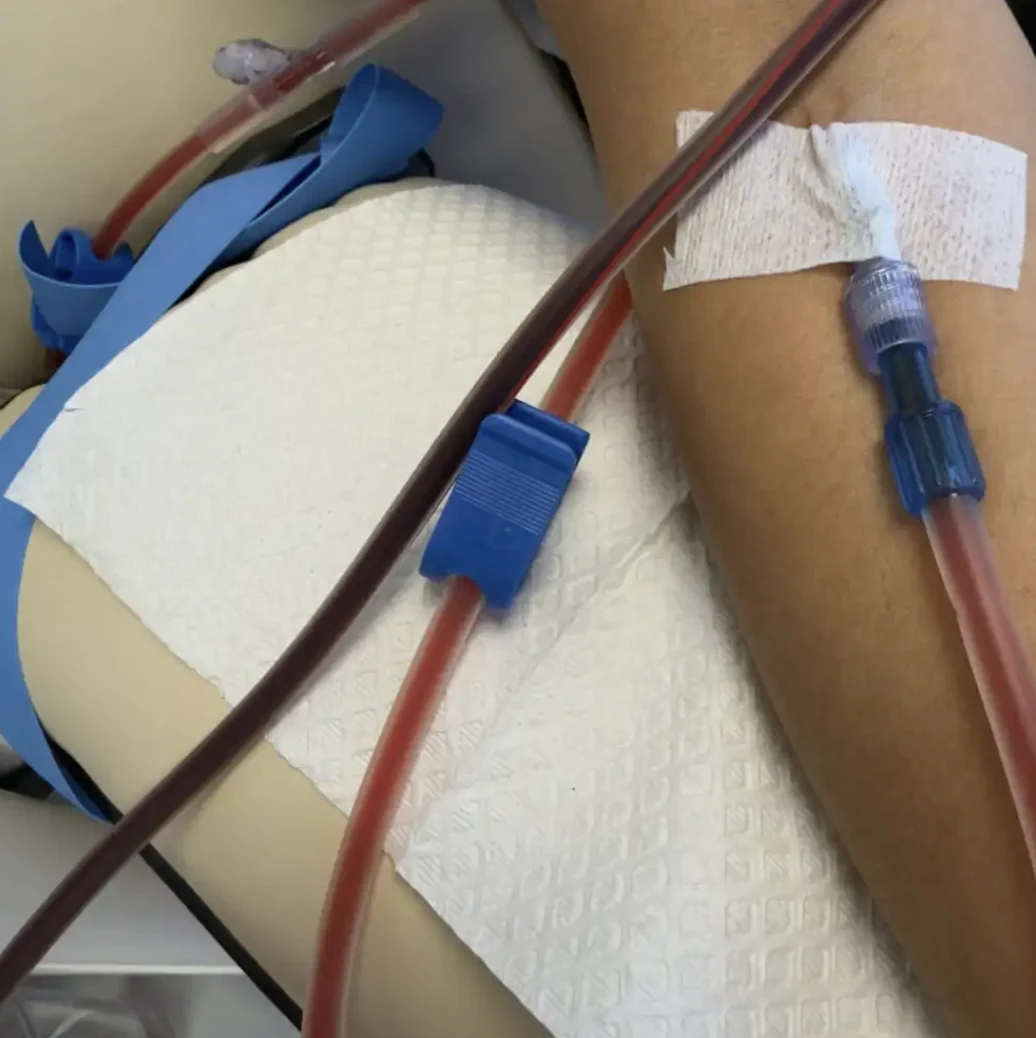
Top Physician-Guided Biohacks Worth Considering
Explore top physician guided biohacks, from EBO3 Therapy to HBOT, with physician-supervised screening and personalized plans for recovery and longevity.
Read
Plasma Exchange Versus Plasmapheresis Explained
Plasma exchange versus plasmapheresis: learn how these terms differ, what a TPE procedure involves, and why clinical screening and guidance matter most.
ReadMedical Disclaimer: Information on this website is for educational purposes only and is not intended to diagnose, treat, cure, or prevent any disease. It is not a substitute for medical advice. Individual results vary. Consult a qualified healthcare provider before beginning any treatment.